
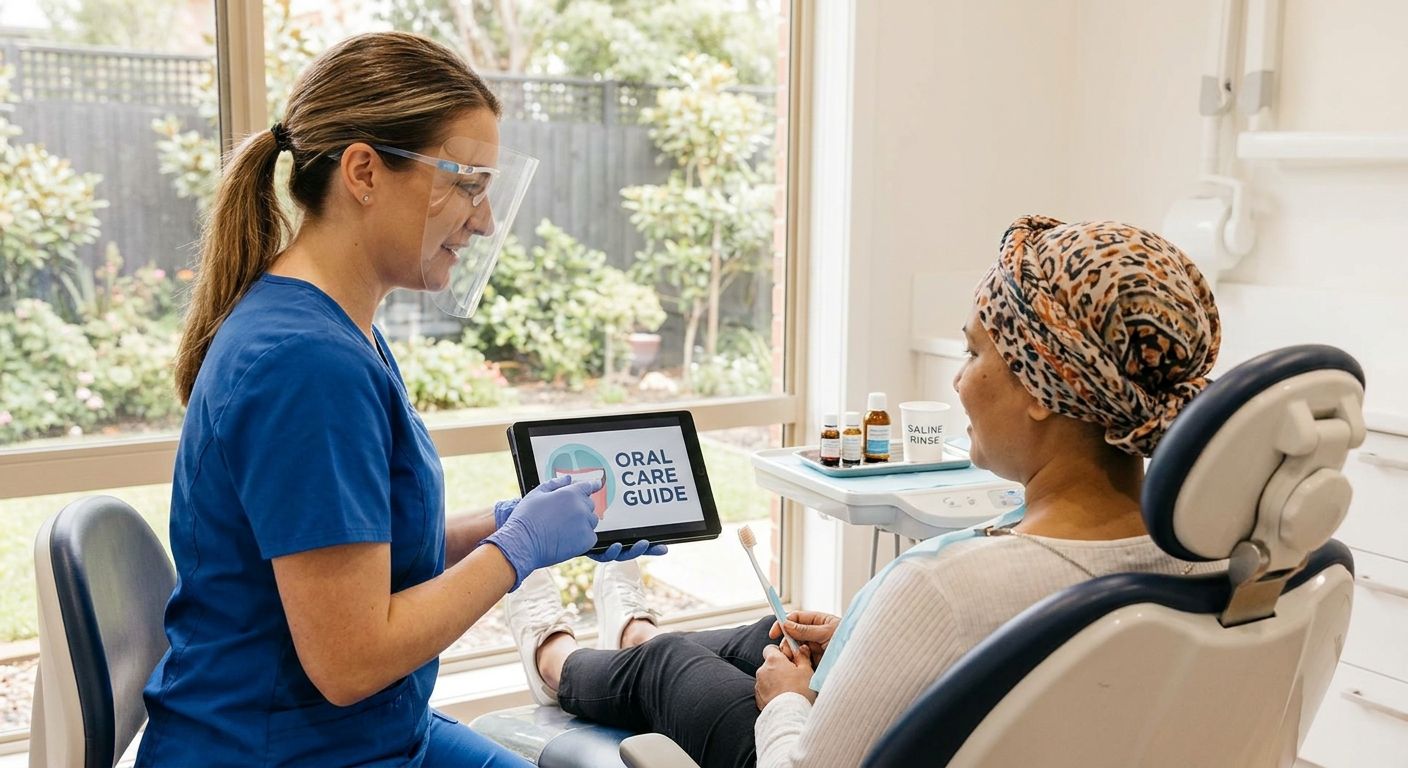
Chemotherapy patients need a dental care plan that is coordinated with their oncology team before, during, and after treatment, with the goal of stopping mouth infections and sores before they interrupt a cancer treatment schedule. A cavity that would wait a year in a healthy adult can become a systemic infection risk when white blood cell counts drop, so the timeline and the priorities look nothing like a routine dental checkup.
- Dental care during chemotherapy works best when a clearance exam happens 2-3 weeks before the first infusion.
- Active infections and unstable teeth get treated or removed before chemo starts, not during it.
- Soft-bristle brushes and alcohol-free rinses protect mouths raw from mucositis during treatment.
- Elective dental work waits for the recovery window between chemo cycles, not the nadir week.
- Dental Arts of Atlantis coordinates pre-chemo exams with oncology teams across Palm Beach County.
Why dental care during chemotherapy matters
Oncologists ask for dental clearance before chemo for a specific reason: chemotherapy drugs suppress bone marrow production, and a suppressed immune system can't fight off a bacterial infection that started in a cavity or an inflamed gum. What starts as a toothache in a healthy person can turn into a hospital admission in a neutropenic chemo patient.
Chemo also changes the mouth directly. Many regimens cause dry mouth, and a mouth without enough saliva loses its natural defense against decay and bacteria — the same issue covered in how to manage dry mouth caused by medication, which applies almost word for word to chemo-induced xerostomia. Mucositis, the painful breakdown of the mouth's lining, hits a large share of patients on certain chemo drugs and can make eating and brushing miserable for days at a time.
The fix isn't complicated, but it has to happen on the right schedule. The dental work has to happen before, or carefully around, the chemo — never as an afterthought once treatment is already underway.
Get a dental clearance exam before your first infusion
The moment a cancer diagnosis and treatment plan are set, dental clearance should go on the calendar — not after the first round of chemo.
- Book the exam as soon as an oncologist confirms a chemo start date, ideally 2-3 weeks out
- Get a full-mouth X-ray series to catch hidden decay or bone infection
- Flag any loose fillings, cracked teeth, or ill-fitting crowns that could trap bacteria
- Ask about removing orthodontic brackets or appliances that could irritate cheek tissue during mucositis
- Confirm with the dentist and oncologist that any needed extractions have enough healing time before infusion #1
Clear infections and unstable teeth before treatment begins
Any tooth or gum problem that's likely to flare up during chemo gets addressed now, while the immune system can still handle a procedure and heal from it.
- Treat active cavities and periodontal infections immediately, not on a wait-and-see basis
- Extract teeth with a poor long-term prognosis rather than trying to save them mid-treatment
- Complete root canals on teeth that are savable — a tooth that can be preserved (see how to save a tooth instead of getting it extracted) is worth saving before chemo starts, not after
- Ask whether antibiotic premedication is needed if a port, PICC line, or low blood counts are already in place — the same protocol used for dental visits needing antibiotic premedication applies to many chemo patients with central lines
- Treat gum disease now, since inflamed gums bleed and invite infection once platelet counts fall
Build a gentle daily hygiene routine for treatment days
Once chemo starts, the goal shifts from fixing problems to preventing new ones without irritating tissue that's already fragile.
- Switch to an ultra-soft or child-size toothbrush to avoid tearing thin gum tissue
- Use a bland, alcohol-free fluoride toothpaste and skip whitening formulas that sting sensitive mouths
- Floss gently once a day unless a care team advises against it during low platelet weeks
- Rinse with a baking soda and salt water solution after meals instead of commercial mouthwash
- Brush after every meal if nausea allows, since food debris sitting in a compromised mouth speeds up decay
Manage dry mouth and mucositis as they appear
Dry mouth and mouth sores are the two side effects most likely to derail a chemo patient's ability to eat, sleep, and stay on schedule.
- Sip water throughout the day instead of drinking large amounts infrequently
- Use xylitol lozenges or sugar-free gum to stimulate what saliva flow remains
- Avoid acidic, spicy, or rough-textured foods once mouth sores develop
- Ask about a prescription saliva substitute if dry mouth is severe and persistent
- Report any sore that hasn't started healing within a week or two — the same red flag covered in how to treat a canker sore that won't heal matters even more when the immune system is suppressed
Watch for bleeding and infection signs during low blood counts
Chemo drops platelet counts on a predictable cycle, and that window changes what's safe to do in the mouth.
- Ask an oncologist for current platelet and white blood cell counts before any dental procedure, even a cleaning
- Switch to foam swabs instead of a toothbrush if gums bleed with minimal contact
- Watch for fever, swelling, or new mouth pain and report it the same day, not at the next scheduled visit
- Avoid flossing during the lowest point of a chemo cycle if bleeding doesn't stop quickly
- Treat any bleeding gum tissue with the same caution used for patients on blood-thinning medication
Time elective dental work around chemo cycles
Non-urgent dental work isn't off the table during chemo — it just has to land in the recovery window between cycles, when blood counts have bounced back.
- Confirm blood counts have recovered to a safe range before scheduling a filling, crown, or cleaning
- Avoid scheduling procedures in the 7-10 day window after an infusion, when counts typically bottom out
- Ask an oncology nurse navigator to help coordinate timing between dental and infusion appointments
- Reschedule rather than push through a procedure if counts haven't recovered on the expected day
- Keep dental anxiety in check with a calm, predictable schedule rather than last-minute appointments
“If a tooth might not survive six months of chemo, pull it before treatment starts, not during.”
Screen for oral cancer and monitor healing after treatment
Once chemo ends and blood counts stabilize, dental care shifts back to restoration and long-term monitoring.
- Schedule restorative work like fillings or crowns once an oncologist confirms it's safe
- Get an oral cancer screening at the first post-chemo visit, since chemo patients carry elevated risk for oral tissue changes
- Monitor for lingering dry mouth, since some chemo regimens cause salivary damage that doesn't fully reverse
- Rebuild a normal cleaning schedule gradually rather than jumping straight back to aggressive whitening or deep cleanings
- Flag any tooth sensitivity or enamel changes that showed up during treatment for follow-up
Comparison: dental care options across the chemo timeline
| Care Option | Best For | Key Limitation | Verdict |
|---|---|---|---|
| Pre-chemo clearance exam | Anyone about to start a chemo regimen | Must happen before infusion #1, no room to delay | Do this first |
| During-treatment maintenance visits | Patients already in active chemo cycles | Limited to non-invasive care outside the nadir window | Schedule carefully |
| Emergency mucositis or infection care | Sudden mouth sores, swelling, or fever | Treats symptoms, doesn't replace oncology coordination | Act same day |
| Post-chemo restorative dentistry | Patients cleared by oncology after treatment ends | Waits for blood counts and immune function to normalize | Wait for clearance |
Get pre-chemo dental clearance scheduled
Coordinate your exam with your oncology treatment timeline before infusion day.
Common mistakes chemo patients make with dental care
- Waiting for symptoms instead of scheduling clearance early — by the time a tooth hurts, chemo may already be underway and options are limited
- Using whitening toothpaste or alcohol-based mouthwash during mucositis, which burns already-raw tissue
- Dropping flossing entirely instead of switching to a gentler technique, which lets gum disease progress unchecked
- Booking elective dental work during the nadir week instead of the recovery window between cycles
- Not telling the dental team about a port, PICC line, or infusion schedule, which affects whether antibiotic premedication is needed before any procedure
FAQ
What is the best dental care during chemotherapy?
The best dental care during chemotherapy starts with a clearance exam 2-3 weeks before the first infusion, followed by gentle daily hygiene and treatment timed to the recovery window between cycles. Coordination between the dentist and oncologist matters more than any single product or technique.
How soon before chemo should you see a dentist?
See a dentist as soon as a chemo start date is confirmed, ideally 2-3 weeks before the first infusion. This gives enough time to treat infections or extract unstable teeth and let the mouth heal before immune suppression begins.
Can you get dental work done during chemotherapy?
Non-urgent dental work is possible during chemotherapy but only during the recovery window between cycles, when blood counts have returned to a safe range. Procedures scheduled during the nadir week carry a higher risk of infection and bleeding.
What causes mouth sores during chemo and how do you treat them?
Chemo drugs can damage the fast-growing cells lining the mouth, causing mucositis and painful sores. Treatment focuses on alcohol-free rinses, avoiding acidic or spicy foods, and reporting any sore that doesn’t start healing within a week.
Is it safe to floss during chemotherapy?
Flossing is usually safe during chemotherapy except during the lowest point of a chemo cycle, when platelet counts drop and bleeding doesn’t stop easily. Ask an oncologist for current blood counts before continuing a normal flossing routine.
Do chemo patients need antibiotics before dental treatment?
Some chemo patients need antibiotic premedication before dental procedures, particularly those with a port, PICC line, or very low white blood cell counts. This decision is made jointly by the dentist and oncologist based on current lab values.
How long after chemo can you get a filling or crown?
Restorative work like fillings or crowns can typically resume once an oncologist confirms blood counts and immune function have stabilized after the final chemo cycle. There’s no fixed universal timeline since recovery varies by regimen and patient.
Can chemotherapy cause tooth loss?
Chemotherapy itself doesn’t directly cause tooth loss, but untreated infection, severe dry mouth, and delayed dental care during treatment can accelerate decay and gum disease that leads to it. Pre-chemo clearance and consistent hygiene during treatment lower that risk.
One last thing
The biggest difference between chemo patients who finish treatment without a dental emergency and those who end up in urgent care with a swollen jaw isn't the toothpaste or the rinse — it's timing. A clearance exam booked the same week the oncology treatment plan is finalized, not the week before infusion #1, is the single move that prevents most of the dental complications seen during chemotherapy in 2026.
Related guides