
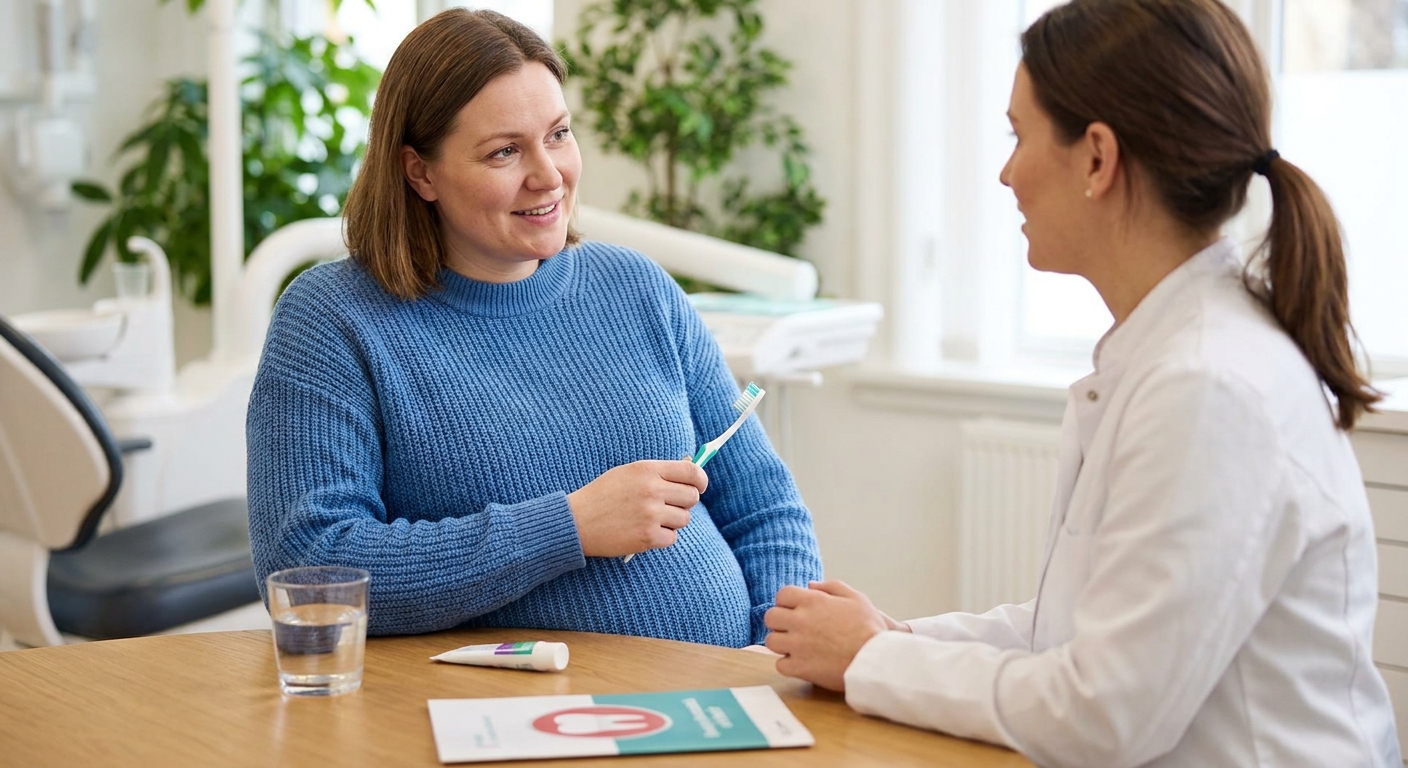
Pregnancy gingivitis hits an estimated 60 to 75 percent of expecting mothers, and the swelling, bleeding, and tenderness catch most women off guard around week 14. This guide covers what dental care during pregnancy actually looks like at Dental Arts of Atlantis in Lake Worth, which treatments are safe by trimester, and which ones to push to after delivery.
- Dental care during pregnancy is safest in the second trimester (weeks 14-20) for cleanings and fillings.
- Pregnancy gingivitis affects 60-75% of expecting mothers – treat it early, don’t wait it out.
- Skip elective teeth whitening and Botox until after delivery – both go on hold, not permanently.
- Emergency dentistry (a cracked tooth, an abscess) gets treated at any trimester – infection is the bigger risk.
- Routine cleanings every 3-4 months during pregnancy keep gum sensitivity from turning into periodontitis.
Why this matters
Hormone shifts during pregnancy – mainly progesterone – make gum tissue more reactive to the same plaque that never bothered you before. That means bleeding when you brush, puffiness along the gumline, and sometimes a localized "pregnancy tumor" (a benign, harmless growth that usually shrinks after birth).
Untreated gum inflammation doesn't stay cosmetic. Moderate-to-severe periodontitis has been associated with preterm birth and low birth weight in multiple studies, which is exactly why obstetricians now ask about dental visits at the first prenatal appointment. Dental care during pregnancy isn't optional maintenance – it's part of prenatal care, and 2026 guidance from both the ADA and ACOG treats it that way.
The good news: almost everything routine is safe. The confusion is usually about when, not whether.
Who this is for
This is for a pregnant woman in Palm Beach County who noticed her gums bleeding more than usual, felt a tooth ache flare up in the second trimester, or has a cleaning on the calendar and isn't sure if it's still okay to go. It's also for anyone who paused dental care entirely after a positive test and now wants a plan instead of guesswork.
What to look for in dental care during pregnancy
A practice that asks about your due date and OB before treating
A dentist who doesn't ask which trimester you're in, or whether your OB has flagged anything, is skipping a step that matters. Positioning during treatment (lying flat too long in the third trimester can restrict blood flow) and medication choices both depend on that timeline.
X-ray protocols that use shielding and low-dose digital equipment
Digital dental X-rays carry a fraction of the radiation of old film X-rays, and a lead apron with a thyroid collar limits exposure further. The ADA and ACOG both consider dental X-rays safe during pregnancy when shielded properly – but ask the practice to confirm their equipment is digital before you sit down.
Local anesthesia that's been studied in pregnancy
Lidocaine, the most common numbing agent used in fillings and root canals, is classified as safe for use during pregnancy in the amounts a dental visit requires. If a provider can't tell you which anesthetic they use, that's a red flag, not a technicality.
Flexibility on scheduling around morning sickness and fatigue
First-trimester nausea and third-trimester exhaustion both make sitting in a dental chair harder. A practice that lets you reschedule without friction, or times appointments for your best hours, keeps you from skipping care out of dread.
A plan for gum sensitivity, not just a cleaning
Pregnancy gingivitis needs a treatment plan – deeper cleanings if pockets have formed, a home-care adjustment, and a follow-up interval shorter than the standard six months. A single cleaning with no plan attached leaves the underlying inflammation to keep building.
Top picks for managing dental care during pregnancy
The essential pick: gum disease treatment for pregnancy gingivitis. If your gums bleed with brushing or flossing, this is the visit to book first, not last. Gum disease treatment for early-stage periodontitis addresses inflammation before it progresses past the gumline into bone-supporting tissue. Most pregnancy gingivitis responds to a deep cleaning and a tighter recall schedule – every 3 to 4 months instead of the standard 6. Verdict: Buy – schedule this at the first sign of bleeding.
The safe-window pick: restorative work in the second trimester. A cavity that started before pregnancy doesn't pause just because you're expecting, and an infected tooth left alone is a bigger risk to a pregnancy than a filling or a root canal ever is. Root canal treatment for an infected tooth is considered safe in the second trimester, when nausea has usually settled and the risk of preterm labor from lying in a chair is lowest. Verdict: Buy – the second trimester is the window, don't wait for week 30.
The whole-family pick: routine check-ins that carry past delivery. Pregnancy is often the point where a woman starts thinking about care for the whole household, not just herself. Family dentistry for busy Palm Beach County households sets up a recall schedule that carries you through pregnancy and into pediatric visits once the baby has teeth. Verdict: Consider – useful if you don't already have a family provider.
The wildcard: sedation dentistry, only with OB sign-off. Some pregnant patients have dental anxiety severe enough that avoidance becomes the bigger risk. Sedation options exist, but nitrous oxide and most sedative medications are generally avoided in the first trimester and only used later with explicit obstetrician clearance. Verdict: Hold – talk to your OB before booking, not after.
Book a prenatal dental visit
Bring up gum sensitivity or a due date and get a trimester-appropriate plan.
What to avoid during pregnancy
- Elective teeth whitening. The bleaching agents used for stain removal haven't been studied enough in pregnant patients to call safe, and most dentists recommend waiting until after delivery even though the risk is theoretical rather than proven.
- Botox and dermal fillers. Facial cosmetic treatments like Botox are specifically contraindicated during pregnancy – this one isn't a gray area, it's a straightforward no until you're done breastfeeding.
- Starting Invisalign mid-pregnancy. It's not dangerous, but hormonal changes can shift gum tissue and tray fit in ways that complicate a treatment plan already in progress. Starting a new aligner series is better timed before conception or after delivery.
- Elective implant placement. Dental implants are a multi-month process involving imaging and, often, sedation. None of that is emergency-level urgent, so most providers push non-urgent implant work to after pregnancy.
Verdict comparison
| Care type | Safest trimester | Purpose | Verdict |
|---|---|---|---|
| Gum disease treatment | Any, start immediately | Stop pregnancy gingivitis before it progresses | Buy |
| Root canal / fillings | 2nd trimester | Treat infection or decay that can't wait | Buy |
| Family dentistry check-ins | Any | Ongoing recall and household planning | Consider |
| Sedation dentistry | 2nd-3rd, with OB clearance | Manage severe dental anxiety | Hold |
| Teeth whitening, Botox, elective implants | Postpartum | Cosmetic, non-urgent | Skip until after delivery |
An emergency dentistry visit for a cracked or broken tooth doesn't fit neatly into a trimester chart because it isn't scheduled – it happens when it happens, and it gets treated regardless of how far along you are, since an untreated dental infection carries more risk to a pregnancy than treating it does.
FAQ
Is dental care safe during pregnancy?
Yes, routine dental care is safe during pregnancy and recommended by the ADA and ACOG. Cleanings, fillings, and root canals are all considered safe, with the second trimester generally the most comfortable window for non-urgent work.
Why do my gums bleed more during pregnancy?
Rising progesterone makes gum tissue more reactive to plaque, causing pregnancy gingivitis in an estimated 60 to 75 percent of expecting mothers. It typically starts around 14 weeks and improves with more frequent cleanings.
Are dental X-rays safe while pregnant?
Digital dental X-rays with a lead apron and thyroid collar are considered safe during pregnancy. The radiation dose is a fraction of a film X-ray and is limited to the mouth, not the abdomen.
Can I get a filling or root canal while pregnant?
Yes, both are safe, with the second trimester the preferred timing for non-urgent work. An infected tooth should be treated promptly regardless of trimester because untreated infection carries more risk than the procedure.
Is local anesthesia at the dentist safe during pregnancy?
Lidocaine, the anesthetic most dentists use for fillings and root canals, is considered safe in pregnancy in the doses used for dental work. Confirm with your provider which anesthetic they use if you have concerns.
Should I avoid teeth whitening while pregnant?
Most dentists recommend postponing elective teeth whitening until after delivery. The bleaching agents haven’t been studied enough in pregnant patients to rule out risk, so providers default to waiting.
Can pregnancy gingivitis affect my baby?
Untreated moderate-to-severe periodontal disease has been linked to preterm birth and low birth weight in multiple studies. That’s why treating gum sensitivity early during pregnancy is treated as part of prenatal care, not a cosmetic afterthought.
How often should I see the dentist while pregnant?
Every 3 to 4 months is common during pregnancy if gum sensitivity is present, compared to the standard 6-month interval. Your dentist should set the exact schedule based on how your gums respond to the first cleaning.
One last thing
The pregnancy tumor – a soft, red lump that sometimes shows up on the gums between teeth in the second trimester – alarms almost everyone who gets one, but it's a benign overgrowth of tissue tied to hormone levels, not a health threat. Most shrink on their own within weeks of delivery, and only the ones that bleed heavily or interfere with eating get removed before then.
Related guides