

Teachers spend the school year on a fixed calendar with almost no flexibility for a 2pm dentist appointment, which means dental care for teachers has to work around bell schedules, not against them. The biggest risks for this group aren't cavities — they're stress-related jaw clenching, dry mouth from six hours of continuous talking, and treatment that gets pushed back semester after semester until it becomes an emergency.
- Dental care for teachers works best when scheduled around the 180-day school calendar, not squeezed into a planning period.
- Jaw clenching and TMJ pain are common among educators managing classroom stress — a custom night guard is the first line of defense.
- Dental Arts of Atlantis books same-day and early-morning slots so teachers don’t burn a personal day for a routine visit.
- Summer break is the window for anything bigger than a cleaning: crowns, implants, or a treatment plan that’s been on hold.
- Cherry Financing, checked before CareCredit, is worth comparing before open enrollment locks in your dental coverage for the year.
Why dental care matters for teachers
A teacher's day involves hours of talking, minimal water breaks, and a lunch period too short for a phone call, let alone a filling. That combination adds up to dry mouth, missed symptoms, and a habit of deferring care until winter or summer break.
Jaw and facial muscle tension is the other pattern worth naming directly. Classroom management, parent conferences, and grading deadlines create the kind of sustained stress that shows up as nighttime teeth grinding (bruxism) and morning headaches. A night guard for teeth grinding is one of the most common recommendations for educators walking into Dental Arts of Atlantis with unexplained jaw soreness.
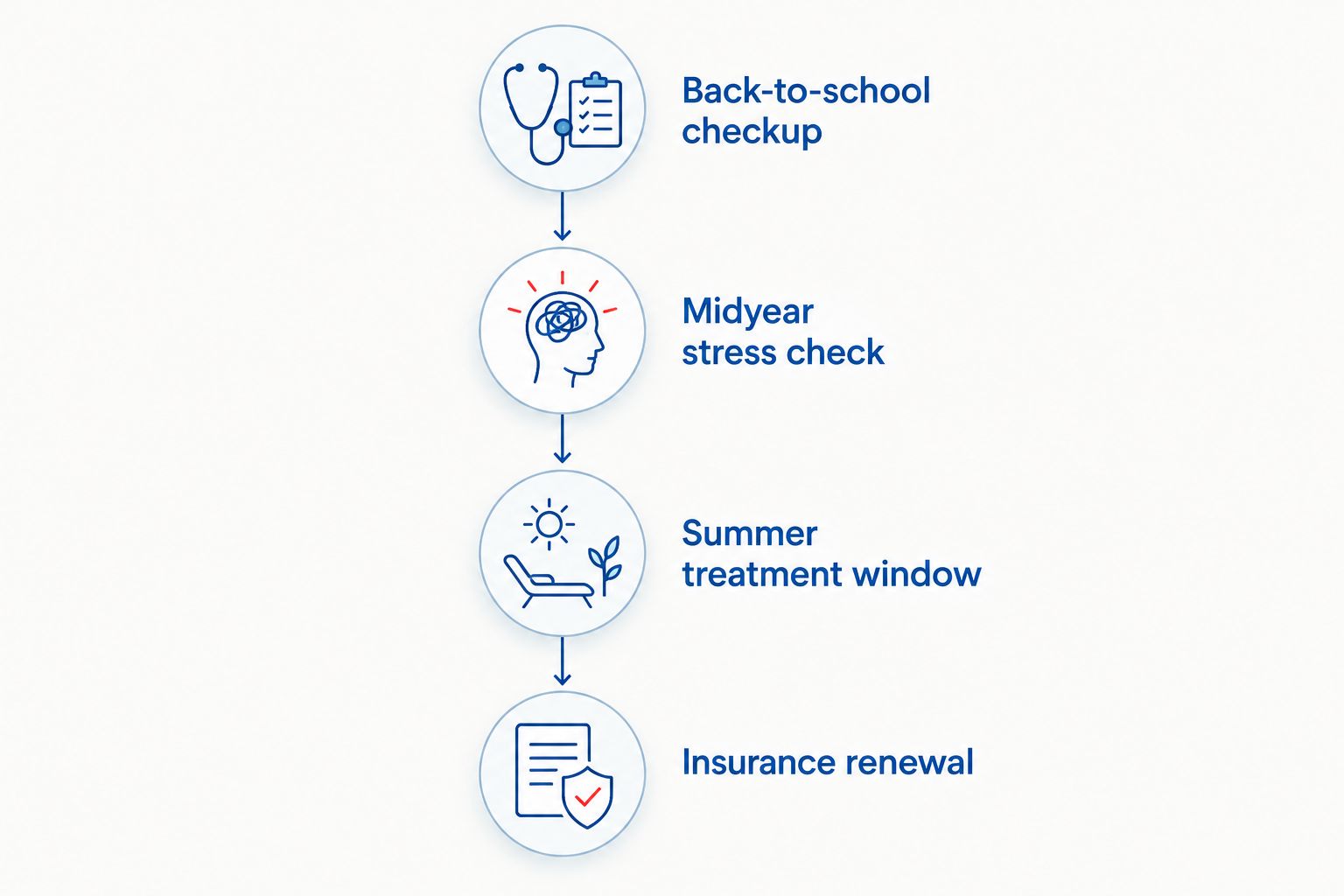
The school calendar itself is the third factor. A dentist visit during the semester competes with instructional time, and most teachers won't request a substitute for a routine cleaning. That's why the plan below is built around when teachers actually have room to act — not around a generic six-month reminder.
Build your cleanings around the school calendar
The 180-day school year leaves a handful of predictable windows: winter break, spring break, and the stretch before the first bell in August. Anchoring routine dental care to those windows beats trying to find a random Tuesday in October.
- Book your fall cleaning during the last two weeks of August, before the calendar fills with back-to-school events.
- Use a half-day of winter break for anything more involved than a cleaning.
- Ask about early-morning appointments (before 7:30am) that fit before first period.
- Set a recurring reminder tied to report card periods, when your own schedule is more predictable.
- Treat spring break as a backup slot if fall or winter didn't happen.
Treat stress-related jaw clenching before it becomes TMJ
Unaddressed grinding doesn't stay a nighttime problem. Left alone through a full school year, it can progress into chronic jaw pain, worn enamel, and recurring headaches that outlast the semester that caused them.
- Notice morning jaw soreness or headaches as an early warning sign, not just "a rough week."
- Ask about a custom-fitted night guard rather than a drugstore version, which rarely matches your bite.
- Track flare-ups against the school calendar — many teachers see spikes during testing weeks and report card periods.
- Bring up jaw popping or clicking at your next cleaning instead of waiting for it to worsen.
- If headaches are frequent, a TMJ treatment for chronic jaw pain and headaches evaluation is worth a separate conversation with your dentist.
Protect your voice and manage dry mouth from a full day of talking
Six hours of projecting your voice over a classroom, combined with skipped water breaks, dries out the mouth in a way most other jobs don't. Saliva is your natural defense against cavities and bad breath, so a chronically dry mouth raises your risk on both fronts.
- Keep water at your desk and sip between classes, not just at lunch.
- Avoid caffeine as your only hydration source between periods — it compounds dryness.
- Chew sugar-free gum during planning periods to stimulate saliva flow.
- Mention dry mouth at your next cleaning if it's a daily pattern, not an occasional one.
- Skip mouthwashes with alcohol, which dry tissue further.
Get anxiety under control without burning a personal day
Dental anxiety plus a tight substitute-teacher budget is a common reason educators delay care for years. The fix isn't willpower — it's picking an appointment format that matches your comfort level and your schedule.
- Ask about nitrous oxide for shorter procedures that don't require a full recovery day.
- Schedule bigger procedures for a Friday afternoon so weekend recovery doesn't cut into class time.
- Talk through sedation options for dental anxiety before the appointment, not in the chair.
- Bring headphones — most practices allow music or a podcast during longer procedures.
- Ask your dentist to explain each step out loud; predictability reduces anxiety more than distraction does.
Use summer break for the treatment you've been putting off
An 8-to-10-week summer break is the closest thing most teachers get to unstructured time. It's the right window for crowns, implants, or a treatment plan that's been sitting on a to-do list since fall conferences.
- Schedule a comprehensive exam in the first two weeks of summer to identify what needs treatment.
- Book multi-visit procedures (implants, crowns) early enough to finish before the new school year starts.
- Ask about a same-day dental appointment if something comes up mid-summer and you don't want to wait weeks.
- Use the recovery flexibility of summer for anything involving swelling or downtime.
- Don't wait until the last week of August — that's when every other teacher has the same idea.
Line up insurance and financing before open enrollment closes
District dental plans vary widely in what they cover, and open enrollment windows are short. Sorting this out before the school year starts avoids a surprise bill mid-semester.
- Read your plan's annual maximum and waiting periods before assuming a procedure is covered.
- Compare Cherry Financing first for anything your plan doesn't cover, with CareCredit as a secondary option.
- Ask your dentist's office for a written cost estimate before committing to a treatment plan.
- Use an FSA or HSA contribution decision during open enrollment to plan for predictable costs like cleanings.
- Confirm which providers are in-network before your first visit of the year, not after the invoice arrives.
Comparison: coverage and payment options for teachers
| Option | Best for | Key limitation |
|---|---|---|
| District PPO dental plan | Teachers with predictable, routine needs | Annual maximums often don't stretch to cover major work like implants or crowns |
| Dental membership plan | Teachers without district dental coverage | Doesn't function like insurance — no claims processing, discount-based instead |
| HSA/FSA contribution | Teachers who want tax-advantaged savings for predictable costs | Funds are use-it-or-lose-it or capped depending on plan type |
| Cherry Financing | Teachers financing treatment their plan doesn't fully cover | Requires a credit check and monthly payment commitment |
The verdict for most educators: pair a district PPO plan for routine cleanings with Cherry Financing for anything major your plan caps out on. That combination covers the predictable and the unpredictable without over-relying on either.
Book around your school schedule
Early-morning and same-day slots built for teachers with tight windows.
Common mistakes teachers make
- Treating winter break as "rest only." A two-week break is enough for a cleaning and a filling, but teachers routinely skip it and wait until summer, letting small issues grow for six more months.
- Ignoring jaw pain as "just stress." Chronic clenching doesn't resolve on its own once the school year calms down — it usually resumes the following semester.
- Assuming district dental coverage handles everything. Annual maximums on most district plans run out quickly once a crown or implant enters the picture.
- Waiting until August to book summer treatment. The last two weeks of summer are the most requested slots of the year; earlier scheduling means more appointment flexibility.
- Skipping water for coffee all day. This compounds classroom-talking dry mouth and raises cavity risk without teachers realizing why.
FAQ
What’s the best dental care schedule for teachers?
Anchor routine cleanings to winter break, spring break, or the two weeks before school starts in August, since these are the most predictable open windows in a 180-day school calendar.
Is dental anxiety common among teachers?
Anxiety about dental visits shows up across the general population, and time pressure from teaching schedules often compounds it by making patients delay care for years. Sedation options like nitrous oxide address both the anxiety and the scheduling concern in one visit.
Can teeth grinding really come from teaching stress?
Yes — sustained classroom stress is a well-documented trigger for nighttime bruxism, which shows up as jaw soreness, headaches, and worn enamel. A custom night guard is the standard first response.
When should teachers schedule bigger dental procedures?
Summer break is the best window for implants, crowns, or multi-visit treatment, since an 8-to-10-week break allows time for both the procedure and any recovery without missing class.
Does district dental insurance cover implants?
Most district PPO plans have annual maximums that don’t fully cover implants or crowns, which is why many teachers pair their plan with financing like Cherry Financing for the difference.
How does talking all day affect dental health?
Continuous talking with limited water breaks dries out the mouth, reducing the saliva that normally protects against cavities and bad breath, making hydration a real dental health factor for educators.
Should teachers get a night guard?
Teachers who notice morning jaw soreness, headaches, or a partner reporting nighttime grinding are strong candidates for a custom night guard, which is fitted to your bite rather than a one-size drugstore version.
What financing options work for teachers without dental coverage?
Cherry Financing is worth comparing first for treatment not covered by a district plan, with CareCredit as a secondary option once terms are reviewed.
One last thing
The single biggest predictor of whether a teacher finishes a treatment plan isn't cost — it's whether the appointment got booked before the school year filled up. Set the next appointment before you leave the office, even if it's four months out; a slot on the calendar survives a busy semester better than a mental note to "call sometime in the spring."
Related guides