
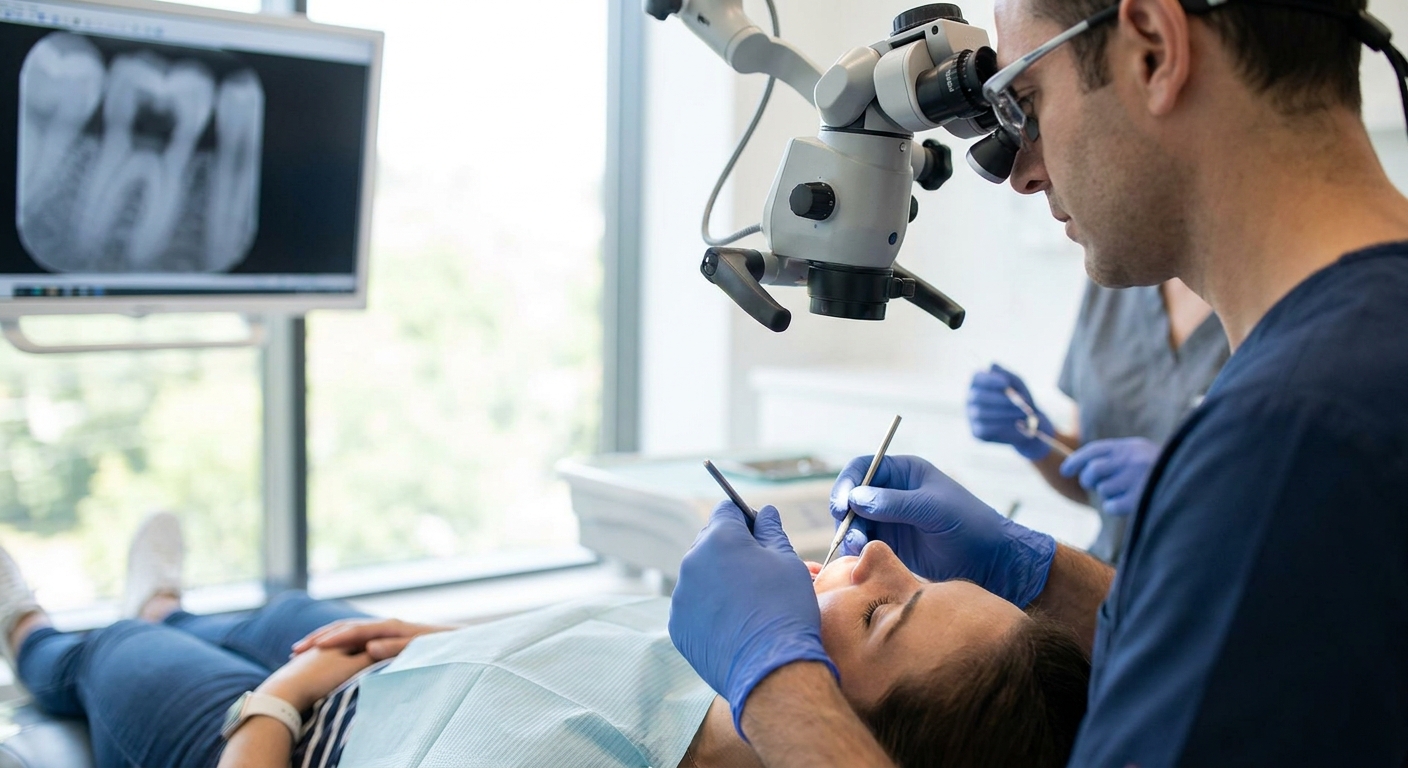
An infected tooth does not get better with time, and a root canal for infected tooth is the standard way to stop the infection, save the natural tooth, and get you out of pain within one to two visits.
- A root canal for infected tooth removes dead or infected pulp and seals the tooth to stop the spread of infection.
- Same-day emergency evaluation matters: untreated tooth infections can spread to the jaw and beyond within 24 to 72 hours.
- Dental Arts of Atlantis offers sedation dentistry for anxious patients who put off root canal treatment out of fear.
- If the tooth structure is too damaged to save, a single-tooth implant is the fallback worth discussing before extraction.
- Skipping the crown or restoration step after treatment is the most common reason a saved tooth fails later.
Why this matters
A tooth infection does not stay contained. Pulp tissue inside the tooth dies when bacteria reach it through a deep cavity, crack, or old filling that has broken down, and once that tissue is dead, your immune system cannot clear it on its own. The infection pushes into the bone around the root, and that is when the throbbing pain, swelling, and sensitivity to hot or cold start.
Waiting does not buy you time. Left alone, an abscess can spread to the jaw, the neck, or in rare but documented cases, become a hospital-level emergency. A root canal for infected tooth treatment removes the source of the infection, cleans the canal, and seals it, which is why dentists reach for it before extraction whenever the tooth can be saved.
Who this is for
This guide is for anyone in Lake Worth or Palm Beach County dealing with a tooth that throbs when you bite down, keeps you up at night, or has visible swelling along the gumline. It is also for parents managing a child's dental emergency, adults who have been avoiding the dentist out of fear and now have a flare-up, and patients weighing a root canal against extraction because they are not sure which route actually saves money and function long term.
If your dentist has already told you a tooth is abscessed or the nerve is dying, you need a plan this week, not a Google search that ends in more questions. That is the gap this page fills.
What to look for in root canal treatment for an infected tooth
Same-day pain relief and diagnosis
An infected tooth is a pain emergency before it is anything else. Look for a practice that can see you the same day or the next morning, take an X-ray, and tell you within the visit whether the tooth is savable. Delaying diagnosis by even a few days lets swelling spread and narrows your options.
Digital 3-D imaging before the drill touches enamel
Root canals fail more often when the dentist cannot see the full shape of the canal system, especially in molars with curved or extra roots. 3-D imaging maps the canal before treatment starts, which cuts down on missed canals and repeat visits.
Sedation options that match your anxiety level
A large share of patients who let an infection get this bad did so because they were avoiding the dentist. Sedation dentistry removes that barrier and lets anxious patients get through a root canal in one relaxed visit instead of postponing again.
A restoration plan, not just a root canal
The root canal itself only removes the infection. A tooth that has had a root canal is more brittle and almost always needs a crown afterward to prevent it from cracking under normal chewing force. If the plan stops at "we'll do the root canal" without mentioning restoration, ask what happens next.
A dentist who treats the whole family, not just the tooth
Infected teeth show up in kids, teens, and adults alike, and juggling separate providers for each family member wastes time you do not have during an emergency. A practice built around family dentistry can see the parent with the abscess and the toddler's checkup in the same week.
Emergency dentistry for a cracked or broken tooth covers the related situation where a crack or break, not decay, is what let bacteria into the tooth in the first place.
The treatment pathways, ranked
1. Same-day emergency root canal evaluation — the fastest way out of pain. If you are in active pain right now, this is the pathway that matters. A same-day exam identifies whether the infection can be treated with a root canal or whether it has progressed too far. Most root canal appointments run 60 to 90 minutes per visit, and many are finished in one to two visits total. Emergency dentistry for a cracked or broken tooth is the same intake pathway if trauma, not decay, caused the infection. Verdict: book same-day.
2. Sedation dentistry for anxious patients — the option for anyone who has been putting this off out of fear. If dental anxiety is the reason the infection got this far, sedation removes the excuse. It lets you get the full procedure done in one sitting instead of walking out mid-treatment. Sedation dentistry for anxious patients walks through the sedation levels available and what to expect before you sit down. Verdict: consider it if fear is why you delayed care.
3. Single-tooth implant — the fallback if the tooth cannot be saved. Sometimes the infection has destroyed too much of the tooth structure, or the crack runs below the gumline where a crown cannot seal it. In that case, extraction followed by an implant replaces the tooth as a standalone unit instead of leaving a gap that shifts your bite over time. Dental implants for one missing tooth is the page to read before you agree to a straight extraction. Verdict: consider before defaulting to extraction alone.
4. Ongoing family dentistry — the pathway for households managing more than one dental issue at once. An infected tooth rarely happens in isolation from the rest of a family's dental needs — a sibling with a first cavity, a parent overdue for a cleaning. Family dentistry for busy Palm Beach County households consolidates that into fewer trips. Verdict: book if you're managing more than one person's dental care.
In pain from an infected tooth right now?
Same-day emergency evaluations available in Lake Worth, FL.
What to avoid
- Riding out the pain with over-the-counter painkillers. Ibuprofen masks the symptom, not the infection. The bacteria keep multiplying under the surface while you feel temporarily better, which is how a manageable infection turns into a swollen face by the weekend.
- Agreeing to extraction without asking about the implant first. Extraction is sometimes the right call, but pulling a savable tooth without discussing what replaces it — and how — is a decision you cannot easily undo. Ask the question before you sign the consent form.
- Skipping the crown after the root canal is done. A treated tooth without a crown is structurally weaker and prone to cracking under normal chewing. Patients who skip this step are the ones who come back a year later with a fractured tooth and a bigger bill.
Verdict comparison
| Pathway | Speed | Sedation available | Best for | Verdict |
|---|---|---|---|---|
| Same-day emergency evaluation | Fastest — same day | Yes | Active pain right now | Book same-day |
| Sedation dentistry | 1 visit, 60-90 min | Yes, by design | Dental anxiety, avoidance history | Consider |
| Single-tooth implant | Multi-step, weeks | Yes | Tooth cannot be saved | Consider before extraction |
| Family dentistry follow-up | Ongoing | Varies | Households with multiple dental needs | Book |
FAQ
What is a root canal for an infected tooth?
A root canal for an infected tooth removes the dead or infected pulp from inside the tooth, cleans the canal, and seals it to stop the infection from spreading. It saves the natural tooth instead of pulling it.
How do I know if my tooth is infected and needs a root canal?
Common signs are throbbing pain, sensitivity to hot or cold that lingers, swelling near the gumline, and a tooth that feels tender when you bite down. An X-ray during a same-day exam confirms whether the infection has reached the pulp.
Is a root canal painful?
Most patients report the procedure itself is no more uncomfortable than getting a filling because the area is numbed first. The pain people associate with root canals actually comes from the infection beforehand, which the procedure resolves.
How much does a root canal cost in 2026?
Cost depends on which tooth is treated and whether a crown follows, since molars with more canals typically cost more than front teeth. Check current pricing directly with the practice, since it varies by case complexity.
Root canal or extraction — which is better for an infected tooth?
A root canal is generally preferred when the tooth structure can still support a crown afterward, since it keeps your natural bite and bone intact. Extraction becomes the better option only when decay or a crack has destroyed too much of the tooth to restore.
Can a root canal fail?
Yes, a treated tooth can develop a new infection if a canal was missed during treatment or if the crown seal breaks down over time. Follow-up X-rays at routine visits catch this early, before symptoms return.
How long does recovery take after a root canal?
Most patients return to normal eating and speaking within a few days, with mild soreness at the site for up to a week. A permanent crown usually follows within a few weeks of the root canal itself.
Is sedation available for root canal treatment?
Yes, sedation dentistry is offered for patients who feel anxious about the procedure and want to complete it in one relaxed visit. It is worth asking about upfront if fear has kept you from treating the infection sooner.
One last thing
The detail most patients miss: the pain often gets better right before an infection gets worse. That temporary relief usually means the nerve inside the tooth has died completely, not that the infection resolved on its own. If a toothache suddenly goes quiet after days of throbbing, that is not a green light to skip the dentist in 2026 — it is a signal to move faster, because the infection is likely still spreading through the bone even though the nerve itself has stopped sending pain signals.
Related guides