
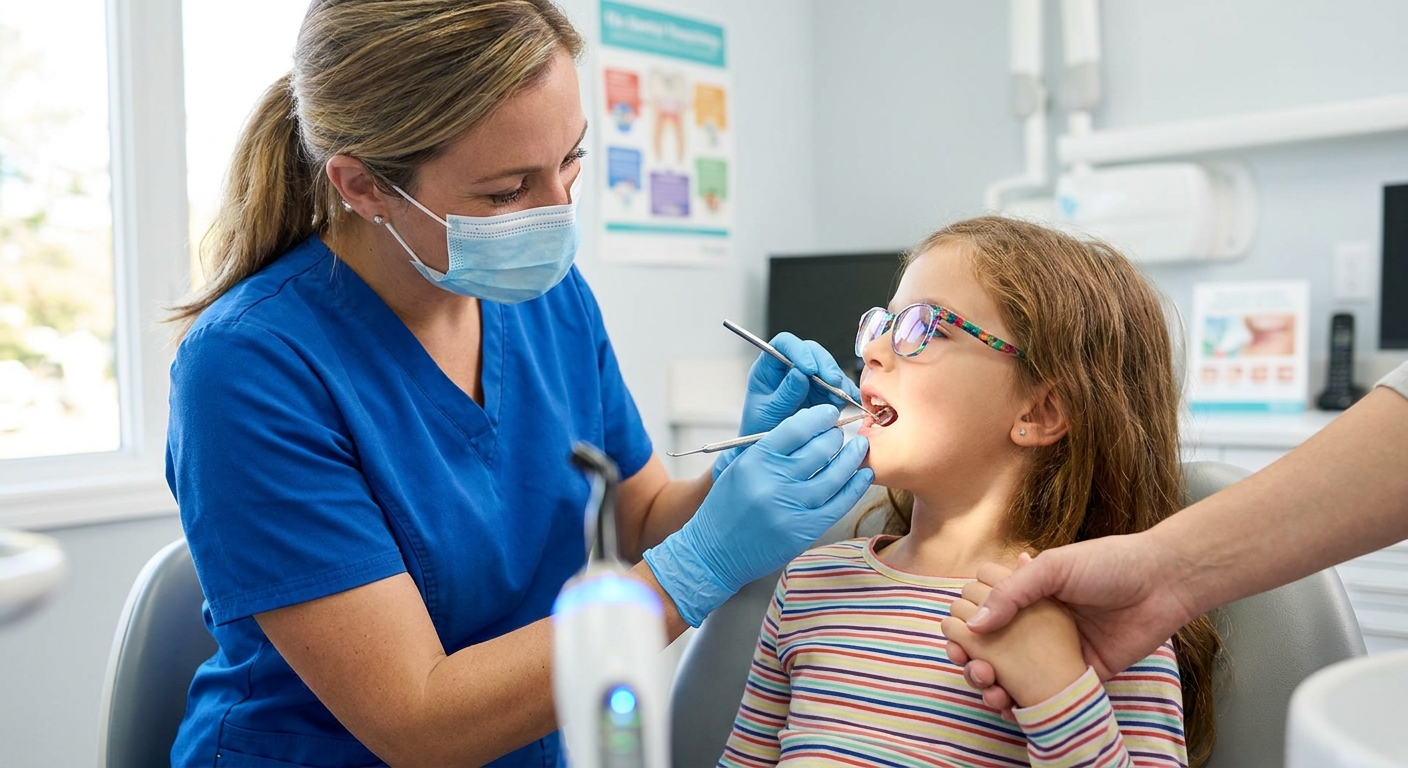
Dental sealants for kids are a thin protective coating painted onto the chewing surfaces of molars to block the bacteria that cause cavities — and for school-age kids in Palm Beach County, the timing decision matters more than most parents realize.
- Dental sealants for kids work best on first molars around age 6 and premolars around age 12 — the verdict is Buy for both.
- A sealant lasts 5 to 10 years and costs far less than a filling if a cavity forms first.
- Kids without sealants get nearly three times more cavities in molars than kids with them, per CDC data.
- Anxious or gag-prone kids do fine with sealants when paired with a calmer sedation approach.
- Sealants are not a substitute for brushing, flossing, or six-month checkups.
Why this matters
Molars have deep pits and grooves that a toothbrush bristle can't reach. Food and bacteria sit there for years, and by the time a cavity shows up on an X-ray, the tooth already needs a filling.
Dental sealants for kids close off those grooves before decay starts. The CDC has tracked this for years and the finding holds up: kids without sealants develop almost three times more cavities in their molars than kids who have them. That's not a small edge — it's the difference between a five-minute painting appointment in 2026 and a filling appointment (or three) by 2029.
Who this is for
This guide is for parents of kids roughly ages 5 to 14 — specifically the window when the first and second permanent molars erupt. If your child still has all baby teeth, sealants aren't relevant yet. If your teenager already has fillings in every molar, sealants won't undo that, but they can still protect whatever molar surfaces are still clean.
What to look for in dental sealants for kids
Timing tied to tooth eruption, not birthday
Sealants only work on a tooth that has fully erupted and hasn't decayed yet. First molars typically break through around age 6, second molars around age 12. Waiting past that window means the grooves have already been exposed to bacteria for months, sometimes years.
Material that matches your child's risk level
Resin-based sealants bond tighter and last longer — often 5 to 10 years with normal wear. Glass ionomer sealants release fluoride but wear down faster, usually within a year or two. For a school-age kid eating school lunches five days a week, durability matters more than the fluoride bump.
A dentist who checks for existing decay first
Sealing over a cavity that's already started traps the decay underneath and makes it worse, not better. A proper exam and sometimes an X-ray should come before the sealant, not after.
A comfortable, no-drill process
Sealant placement doesn't require anesthesia, drilling, or numbing in the vast majority of cases. If a practice is proposing sedation or a lengthy procedure for a routine sealant, that's a sign to ask more questions.
Follow-up checks built into regular visits
Sealants can chip or wear thin, and a dentist needs to check them at every six-month cleaning. A sealant nobody checks is a sealant that quietly stops working.
Coverage that fits your family's schedule
Both molars usually need sealing in the same visit window, and second molars need a repeat visit around age 12. Families with more than one kid in the 6-to-14 range benefit from a practice that can batch these visits instead of scheduling four separate trips.
Top picks: how to handle sealants at each stage
First permanent molars, age 6 — the safe pick. These four molars erupt right around kindergarten and have the deepest grooves in the mouth. One sealant appointment covers all four in under 20 minutes with no numbing. If your child is heading into their first real dental milestone, pairing this with a first dental visit for toddlers and young kids sets the pattern early. Verdict: Buy.
Second permanent molars, age 12 — the one parents forget. These come in years after the first set and get missed constantly because parents assume sealants were a one-time thing at age 6. They weren't. Second molars need their own sealant, and skipping this step is the single most common gap in a kid's cavity prevention plan. Folding it into a routine visit through family dentistry built for busy Palm Beach County households keeps it from slipping through the cracks. Verdict: Buy.
Anxious or gag-prone kids — the one that needs a plan, not a skip. Some kids resist anything near the back of their mouth, and sealants involve a bit of drying and a bite-down step that can trigger a gag reflex. Skipping the sealant because a kid is anxious just trades a five-minute appointment for a future filling appointment that's twice as long. A practice offering sedation dentistry for anxious patients can get a nervous kid through it without a fight. Verdict: Consider.
A chipped sealant after a hard fall or bad habit — the wildcard. Sealants can crack if a kid bites down on ice, pens, or hard candy, and a cracked sealant on its own usually isn't an emergency. But if the same impact cracks the tooth underneath, that's a different problem entirely, and it needs same-day attention through emergency dentistry for a cracked or broken tooth rather than a routine cleaning six weeks out. Verdict: Consider.
Get your child’s molars checked
Find out which teeth need sealants before the next school year starts.
What to avoid
- DIY sealant kits sold online. These are not the same resin used in a dental office and they aren't bonded under the same conditions — they wear off within weeks and give a false sense of protection.
- Sealing a tooth that already has a cavity started. This traps decay under a coating instead of stopping it, and it can take longer to catch on a routine checkup.
- Treating sealants as a substitute for brushing twice a day. A sealant protects the chewing surface of a molar. It does nothing for the sides of the teeth or the gumline, where plaque still builds up.
Verdict comparison across the decision points
| Situation | Sealant recommended? | Why | Verdict |
|---|---|---|---|
| First molars, age 6 | Yes | Deepest grooves, newly erupted, zero decay risk yet | Buy |
| Second molars, age 12 | Yes | Most commonly skipped; same decay risk as first molars | Buy |
| Tooth with early decay | No | Sealing traps decay instead of stopping it | Skip |
| Anxious child | Yes, with support | Procedure is painless but needs a calmer approach | Consider |
| Baby teeth (primary) | Rarely | Baby molars fall out before benefit outweighs cost | Skip |
FAQ
What age should kids get dental sealants?
Most kids get their first sealants around age 6, right when the first permanent molars erupt, and a second round around age 12 when the second molars come in. Waiting past either window means the grooves have already been exposed to plaque.
How long do dental sealants last?
A resin-based dental sealant lasts 5 to 10 years with normal wear. Dentists check them at every six-month cleaning and can reapply a section if it chips or thins.
Do dental sealants hurt kids?
No. Sealant placement doesn’t require drilling, numbing, or anesthesia in almost all cases, and the whole process for one molar takes a few minutes. A dentist cleans the tooth, applies the sealant, and cures it with a light.
Are dental sealants covered by insurance?
Most dental insurance plans cover sealants for kids, often at little or no out-of-pocket cost, since insurers treat them as preventive care. Coverage rules vary by plan, so checking with your provider before the visit avoids surprises.
Can a cavity still form under a sealant?
Only if decay had already started before the sealant was applied, which is why a proper exam comes first. A correctly placed sealant on a healthy tooth blocks new decay from forming underneath.
Is a dental sealant the same as a filling?
No. A filling replaces tooth structure already lost to decay, while a sealant coats a healthy tooth to prevent decay from starting. Sealants are faster, cheaper, and only apply to teeth that haven’t decayed yet.
Do sealants replace brushing and flossing?
No. Sealants only protect the chewing surfaces of molars, not the sides of teeth or the gumline. Kids with sealants still need to brush twice a day and floss to prevent cavities elsewhere.
What if my child is too scared for the sealant appointment?
Sealants don’t require sedation for most kids, but a practice offering a calmer, guided approach can help genuinely anxious kids get through the appointment without distress. Skipping the appointment out of fear usually leads to a bigger procedure later.
One last thing
The most overlooked detail in dental sealants for kids isn't the sealant itself — it's the second-molar visit at age 12 that most parents never schedule because they think the job got done at age 6. Set a calendar reminder for that birthday and treat it the same way you'd treat the first one.
Related guides