
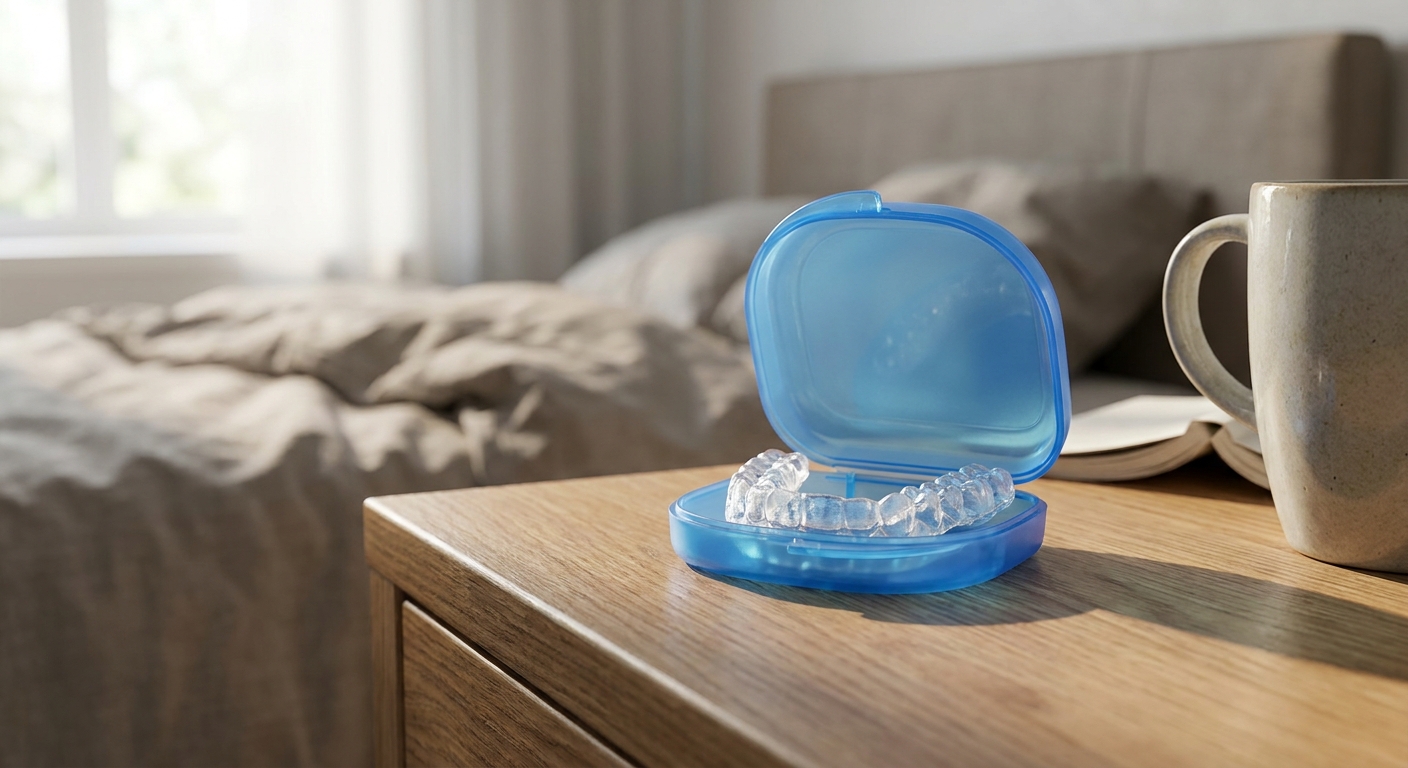
Grinding your teeth at night wears down enamel, triggers jaw pain, and by 2026 sends more Palm Beach County adults into the dentist's chair than almost any other sleep-related complaint. This guide breaks down which night guard for teeth grinding actually protects your teeth and calms your jaw — and which options just delay the real fix.
- A custom-fitted night guard for teeth grinding outlasts drugstore trays and protects enamel for 3-5 years — buy custom.
- Boil-and-bite guards work as a short-term stopgap but soften and crack within 6-12 months of nightly use.
- Jaw pain that continues despite a night guard usually points to TMJ dysfunction, not just bruxism — get it checked.
- Soft guards suit light grinders; hard acrylic guards hold up for heavy clenchers — matching type to severity matters most.
- Grinding linked to snoring or gasping at night should get a sleep apnea screening alongside the guard fitting.
Why this matters
Untreated grinding does more than wear down enamel. It flattens molars, loosens fillings, and strains the jaw joint until headaches and morning soreness become a daily routine. Left alone long enough, chronic clenching turns into the kind of chronic jaw pain and headaches that need TMJ treatment, not just a mouthguard.
A night guard for teeth grinding is the first line of defense, but the wrong one just delays the same damage. The right one, fitted correctly, stops the wear pattern and buys your jaw joint the rest it needs to calm down.
Who this is for
This guide is for adults who wake up with a sore jaw, notice flattened or chipped back teeth, or have a partner who reports grinding sounds through the night. It also covers teens who clench under stress and anyone already told by a dentist they show signs of bruxism. If you're in Lake Worth or anywhere in Palm Beach County and haven't had your bite evaluated in the last year, this is the group you're in.
What to look for in a night guard for teeth grinding
Material matched to grind severity
Soft guards absorb light clenching but shred under heavy grinding within weeks. Hard acrylic guards hold up to forceful nighttime clenching without wearing through, which matters if a partner or dentist has already flagged loud, frequent grinding.
Custom fit versus boil-and-bite
A guard molded to your exact bite distributes pressure evenly across your teeth. A boil-and-bite tray covers your teeth but rarely seats correctly, which means you clench harder to hold it in place — the opposite of what you want.
Coverage: full arch or partial
Full-arch guards spread grinding force across every tooth. Partial guards protect fewer teeth and can shift the grinding load onto the ones left uncovered, sometimes making wear worse on the unprotected side.
Comfort and airway space
A guard that's too bulky can restrict tongue space and worsen snoring. If grinding shows up alongside loud snoring or gasping at night, a screening through sleep apnea treatment should happen before or alongside the guard fitting, since the two conditions frequently overlap.
Durability and expected lifespan
A custom hard acrylic guard typically lasts 3-5 years with nightly use. A drugstore guard softens, thins, and needs replacement inside a year — sometimes sooner for heavy grinders.
A follow-up adjustment plan
Bites shift. A guard that fit perfectly in 2026 can feel loose or tight a year later if teeth move or a restoration changes your bite. Guards that come with a follow-up check built in outperform one-and-done fittings.
Top picks for teeth grinding and jaw pain
Custom hard acrylic night guard — the workhorse pick. Molded from an impression of your bite, this style holds up to heavy nighttime clenching without cracking. It typically lasts 3-5 years and is the standard recommendation for anyone with visible enamel wear or a partner-reported grinding habit. Verdict: Buy.
Custom dual-laminate guard — the sensitive-mouth pick. Soft on the inside, hard on the outside, this design cushions teeth that are sensitive to pressure while still resisting heavy grinding forces. It costs more than a single-layer guard but suits patients who find rigid acrylic uncomfortable against sore gums. Verdict: Consider if a standard hard guard feels too abrasive.
Over-the-counter boil-and-bite guard — the stopgap pick. Fine for a week or two while you wait on a custom fitting, but it softens fast and rarely seats well enough to stop clenching pressure. Expect 6-12 months of use before it needs replacing, and expect a looser fit the whole time. Verdict: Consider only as a bridge, never a long-term solution.
TMJ orthotic or splint — the jaw-pain pick. This is a different appliance from a standard grinding guard, built specifically to reposition the jaw joint and relieve pressure on the muscles behind chronic headaches. If pain persists after a standard night guard, this is the next step, not a repeat of the same fix. Verdict: Buy if jaw pain and headaches continue despite a properly fitted guard.
Combined guard-and-sleep-screening approach — the overlap pick. For patients whose grinding shows up alongside snoring or interrupted breathing, pairing a custom night guard with a sleep apnea evaluation catches a problem a mouthguard alone can't fix. Anxious about the fitting appointments themselves? Options through sedation dentistry make impressions and adjustment visits easier to sit through. Verdict: Buy when grinding and sleep-breathing issues show up together.
Get your bite evaluated before you buy a guard
A fitting appointment tells you which guard type actually fits your grind pattern.
What to avoid
- Sports mouthguards sold for football or boxing. They're built for impact, not sustained nighttime pressure, and wear through fast under grinding.
- Thin, one-size drugstore trays marketed as "universal fit." They shift overnight, and a guard that moves does almost nothing to protect enamel.
- Ignoring jaw pain and treating only the worn teeth. A guard that stops enamel wear but leaves the jaw joint untreated can still let clenching crack a tooth badly enough to need emergency dentistry for a cracked or broken tooth.
Verdict comparison
| Guard Type | Best For | Typical Lifespan | Verdict |
|---|---|---|---|
| Custom hard acrylic | Heavy grinders, visible enamel wear | 3-5 years | Buy |
| Custom dual-laminate | Sensitive teeth and gums | 2-4 years | Consider |
| Boil-and-bite (OTC) | Short-term bridge only | 6-12 months | Consider (stopgap only) |
| TMJ orthotic/splint | Chronic jaw pain, headaches | 3-5 years | Buy if pain persists |
| Guard + sleep screening | Grinding with snoring/apnea signs | Varies by device | Buy |
Night guard costs vary by material and coverage, so confirm current pricing and insurance coverage directly with the practice before booking a fitting.
FAQ
What’s the best night guard for teeth grinding?
A custom-fitted hard acrylic night guard is the best option for most adults with moderate to heavy grinding, since it molds exactly to your bite and lasts 3-5 years. Soft or dual-laminate guards work better for lighter grinders with sensitive teeth.
Is a custom night guard better than a store-bought one?
Yes, a custom night guard fits your exact bite and distributes clenching pressure evenly, while a boil-and-bite guard shifts overnight and wears out within 6-12 months. Custom guards typically last years longer.
How much does a night guard for teeth grinding cost?
Cost depends on the material, coverage, and whether insurance applies, so pricing varies by practice and case. Ask about current pricing during your fitting consultation.
Can a night guard fix jaw pain from grinding?
A standard night guard protects teeth from wear but doesn’t always resolve jaw pain on its own. If headaches or jaw soreness continue after fitting, a TMJ-specific orthotic addresses the joint directly instead of just the teeth.
How long does a night guard for teeth grinding last?
A custom hard acrylic guard lasts 3-5 years with regular nightly use, while over-the-counter versions typically need replacing within 6-12 months. Lifespan drops faster for heavy grinders regardless of guard type.
Can teeth grinding cause a cracked tooth?
Yes, sustained nighttime clenching can crack or fracture teeth that already have fillings or weak spots, sometimes requiring urgent repair. A properly fitted guard is the main way to prevent that damage before it happens.
Is teeth grinding linked to sleep apnea?
Grinding and sleep apnea frequently occur together, and treating one without screening for the other can leave symptoms unresolved. If grinding shows up alongside snoring or gasping at night, ask about a sleep apnea evaluation at the same visit.
Do kids or teens need a night guard for grinding?
Teens who clench under stress can benefit from a properly fitted guard, especially if enamel wear or jaw soreness is already visible. A dentist can determine whether a custom guard or a different approach fits a still-developing bite.
One last thing
The guard that stops enamel wear and the guard that treats TMJ pain are not always the same appliance — a lot of patients wear a standard grinding guard for years while the actual jaw pain goes untreated underneath it. If pain persists past 2026's first few months of nightly guard use, that's the signal to ask specifically about a TMJ-focused splint instead of a repeat fitting of the same style.
Related guides