
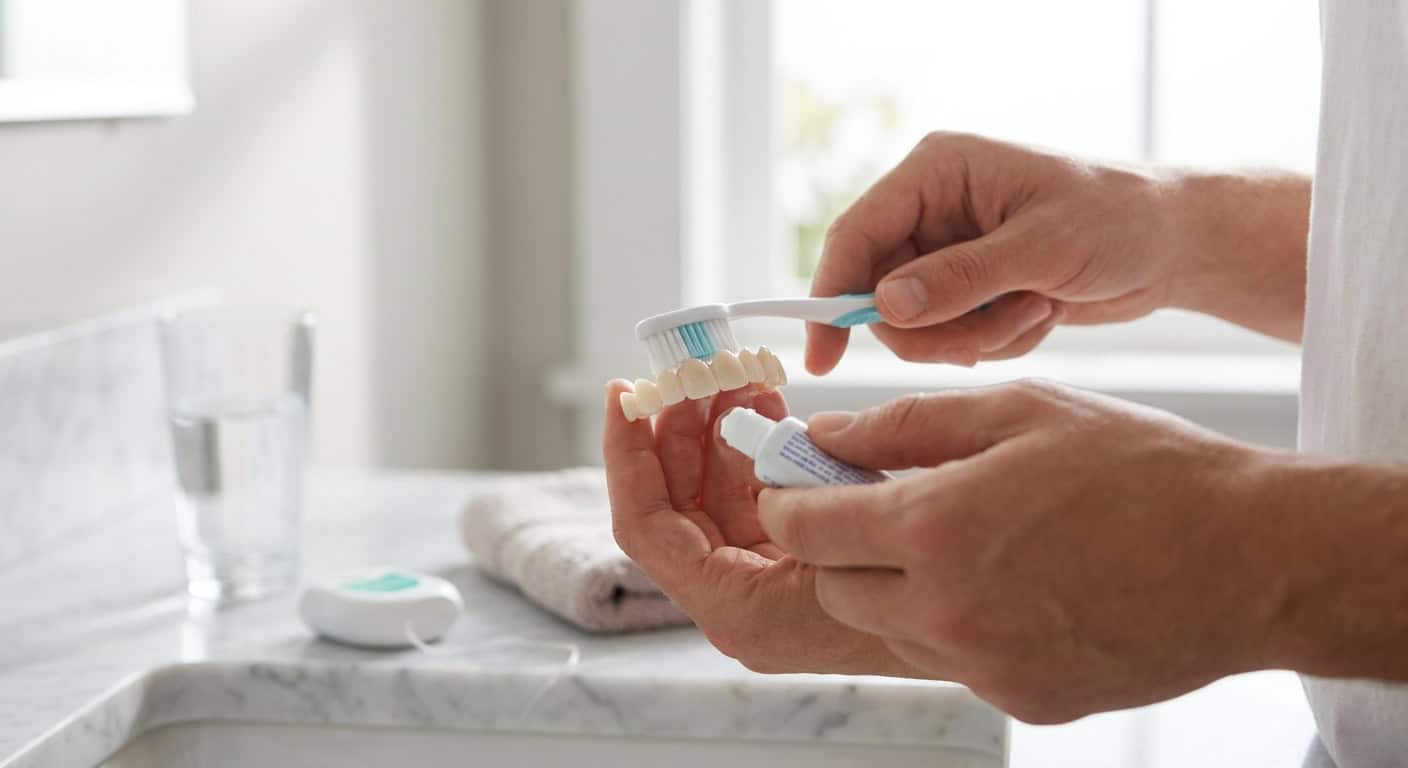
Porcelain veneers hold their shine and shape for 10 to 15 years when they get the right daily care, but neglect can chip or dull them within a few years. This guide breaks down the exact routine that keeps veneers looking new through 2026 and beyond, plus the habits that quietly wreck them.
- Porcelain veneers typically last 10-15 years with consistent brushing, flossing, and 6-month checkups.
- Nighttime grinding is the top cause of early veneer chips – a custom night guard cuts that risk sharply.
- Whitening toothpaste dulls the porcelain finish over time; a non-abrasive fluoride paste is the safer daily pick.
- Coffee, wine, and tobacco stain the resin cement line around a veneer, not the porcelain itself.
- Biting ice, pens, or fingernails chips the composite edge before it touches the porcelain – skip it entirely.
Why this matters
Veneers are a cosmetic investment, and the porcelain itself is genuinely stain-resistant – the surface doesn't absorb color the way natural enamel does. What fails first is almost always the margin: the thin line of resin cement at the gum edge, and the composite bonding that holds the veneer to the tooth underneath. Patients who ask Dental Arts of Atlantis about veneers for chipped or worn front teeth are usually surprised to learn that daily habits, not the material, decide whether a veneer lasts 15 years or needs replacing at year five.
A veneer that chips or discolors early is rarely a manufacturing problem. It's almost always grinding, an abrasive toothpaste, or a hard-bite habit that nobody flagged at the consult. Fixing those three things covers most of what keeps veneers looking new in 2026.
What you'll need
- A soft-bristle toothbrush (manual or electric with a gentle setting)
- Non-abrasive, low-RDA fluoride toothpaste (skip whitening formulas)
- Waxed floss or a floss threader for the veneer margins
- An alcohol-free mouthwash
- A custom night guard, if you grind or clench
- A standing 6-month cleaning and checkup on the calendar
The steps
1. Brush gently, twice a day, for two full minutes
Veneers don't need aggressive scrubbing – the porcelain is smooth and doesn't hold plaque the way natural enamel texture does, so a light hand actually cleans better than a hard one. Hold the brush at a 45-degree angle at the gumline and use short strokes for two minutes, morning and night. Common mistake: brushing hard right after acidic drinks (coffee, orange juice, wine) softens the cement margin temporarily and speeds up wear at the edge.
2. Floss daily, and don't skip the veneer margins
The seam where a veneer meets the gum is the single spot most likely to trap plaque and start gum recession, which then exposes the edge of the veneer and makes it look grayish. Use waxed floss or a threader and go slightly below the gumline at every veneer, not just around natural teeth. Expect slightly pink gums the first week if flossing has been inconsistent – that clears up within 7 to 10 days once plaque is under control.
3. Swap to a non-abrasive, non-whitening toothpaste
Whitening toothpastes rely on mild abrasives or chemical polishing agents to lift stain from enamel, and over months that same abrasion dulls the glossy finish on a veneer. A low-RDA (relative dentin abrasivity) fluoride paste keeps the surface smooth and reflective without stripping shine. If a veneer already looks matte or scratched, a professional polish at a cleaning appointment restores the gloss – no amount of home whitening will.
4. Cut out the habits that crack porcelain
Ice chewing, opening packages with your teeth, chewing on pens, and biting fingernails are the leading causes of chipped veneer edges, and none of them are worth the risk to a cosmetic result you paid for. Porcelain is hard but brittle under a sharp, concentrated bite force – very different from the forgiving flex of natural enamel. Common mistake: treating veneers like stronger teeth. They're not; they're a thin shell bonded to a tooth, and edge chips happen in a single bad bite.
5. Wear a night guard if you grind or clench
Bruxism is the number one reason veneers fail early, because the repetitive, high-force contact during sleep concentrates pressure right on the incisal edge – the thinnest, most vulnerable part of the restoration. A custom night guard for teeth grinding and jaw pain spreads that force across a cushioned surface instead of tooth-on-porcelain contact. Patients who start wearing one after getting veneers typically report fewer morning jaw aches within a few weeks, alongside the protection for the restorations themselves.
6. Rinse after coffee, wine, or tomato-based sauces
The porcelain resists staining, but the thin cement line and any exposed natural teeth around a veneer will still pick up color from coffee, red wine, curry, and tomato sauce. A water rinse right after these foods and drinks keeps color from settling into the margin. If staining around the edges has already set in, ask about the teeth whitening method for coffee and wine stains that's compatible with veneers – not every whitening approach is safe to use near porcelain.
7. Keep every 6-month cleaning and checkup
A hygienist checks veneer margins for early gum recession, catches hairline chips before they spread, and polishes the surface back to its original shine – none of which happens on a home routine alone. Missing the 6-month interval is the single most common reason patients discover a cracked veneer only after it's broken, rather than when it was a small, fixable chip. Set the 2026 schedule now if the last visit was more than six months ago.
8. Address chips or rough edges immediately
A small chip on a veneer edge, caught early, is often a same-visit polish or minor bonding repair. Left alone, that same rough edge catches on the tongue, collects plaque, and widens into a crack that requires full replacement. Don't wait for the next scheduled cleaning if an edge feels sharp or looks visibly uneven – call and get it looked at within a few days.
Get your veneers checked before they crack
A quick exam catches chips and margin wear before they need a full replacement.
Troubleshooting
Veneer feels rough or sharp at the edge. This usually means a small chip has already happened, often from ice or a hard-bite habit. Get it evaluated within a few days – minor chips are often a same-visit polish or bonding fix, while a delayed visit risks a bigger crack.
Gum line looks gray or discolored around the veneer. This is typically gum recession exposing the natural tooth margin under the veneer, not a flaw in the porcelain itself. It's more common in patients who clench or grind, and a TMJ treatment for chronic jaw pain and headaches evaluation can identify whether muscle tension is contributing.
Veneer chipped after biting something hard. Stop using that tooth for biting immediately and call for an appointment – chewing around a chipped edge widens the crack fast. Small chips are repairable; larger ones may need a full veneer replacement.
Whitening toothpaste left the veneer looking dull or scratched. Switch to a non-abrasive, low-RDA paste right away and book a professional polish. Home whitening products can't reverse porcelain dulling; only a dental polish restores the original gloss.
Bad breath persists despite regular brushing. Plaque trapped at the veneer-gum margin is the usual cause, since brushing alone doesn't reach that seam. Add daily flossing with a threader at every veneer, not just natural teeth, and the odor typically clears within a week or two.
A veneer feels loose or has popped off. This is a dental emergency, not a wait-and-see situation – save the veneer if possible and call the same day. Most cases are re-bondable if the underlying tooth structure is intact.
Tools and resources
- Soft-bristle or gentle-mode electric toothbrush
- Non-abrasive, low-RDA fluoride toothpaste
- Waxed floss or a floss threader
- Alcohol-free mouthwash
- A custom night guard if bruxism is a factor
- A standing 6-month cleaning and checkup, tracked on a calendar through 2026
What to do next
If a veneer already looks chipped, dull, or discolored at the edge, the fix window is smaller than most people think – small problems caught early are usually a polish or minor bonding repair, not a full replacement. Book an exam before the next scheduled cleaning if anything looks or feels off, rather than waiting out the full 6-month interval.
FAQ
How long do porcelain veneers last?
Porcelain veneers last 10 to 15 years on average with consistent brushing, flossing, and 6-month checkups. Grinding, hard-bite habits, and abrasive toothpaste can cut that lifespan significantly.
Can veneers stain like natural teeth?
The porcelain surface itself resists staining, but the resin cement line at the gum edge can pick up color from coffee, wine, and tobacco. Rinsing with water after dark drinks and foods keeps the margin from discoloring.
Is a night guard necessary with veneers?
A night guard is strongly recommended if you grind or clench your teeth, since bruxism is the leading cause of chipped veneer edges. It spreads bite force across a cushioned surface instead of concentrating it on the thin porcelain edge.
What toothpaste should I avoid with veneers?
Avoid whitening toothpastes, which use abrasives or polishing agents that dull the glossy porcelain finish over time. A non-abrasive, low-RDA fluoride toothpaste keeps veneers smooth and reflective.
Can I whiten veneers once they are in?
No – porcelain does not respond to whitening gels or trays the way natural enamel does, so whitening products will not change a veneer’s shade. If the shade needs adjusting, that requires a replacement veneer matched to a new target color.
How often should I see the dentist after getting veneers?
Every 6 months, the same as standard dental checkups, so margins and edges can be inspected before small issues become bigger repairs. Skipping this interval is the most common reason patients discover a cracked veneer only after it’s already broken.
What happens if a veneer chips?
A small chip caught early is often repairable same-visit with a polish or minor bonding fix. Left untreated, that rough edge collects plaque and widens into a crack that usually requires full replacement.
Do veneers need special flossing?
Yes – flossing needs to reach slightly below the gumline at every veneer margin, not just around natural teeth, since that seam is where plaque collects fastest. Waxed floss or a threader works better than standard floss for this spot.
One last thing
The part of a veneer that actually ages is almost never the porcelain – it's the cement margin at the gumline, and a professional polish at a routine cleaning fixes dulling or minor discoloration there far more often than patients expect. Most veneer failures reported at year 5 or 6 turn out to be margin wear that a 2026 cleaning schedule would have caught at year 2.
Related guides
- Cosmetic dentistry for a wedding smile makeover
- Best replacement for a chipped or broken front tooth