
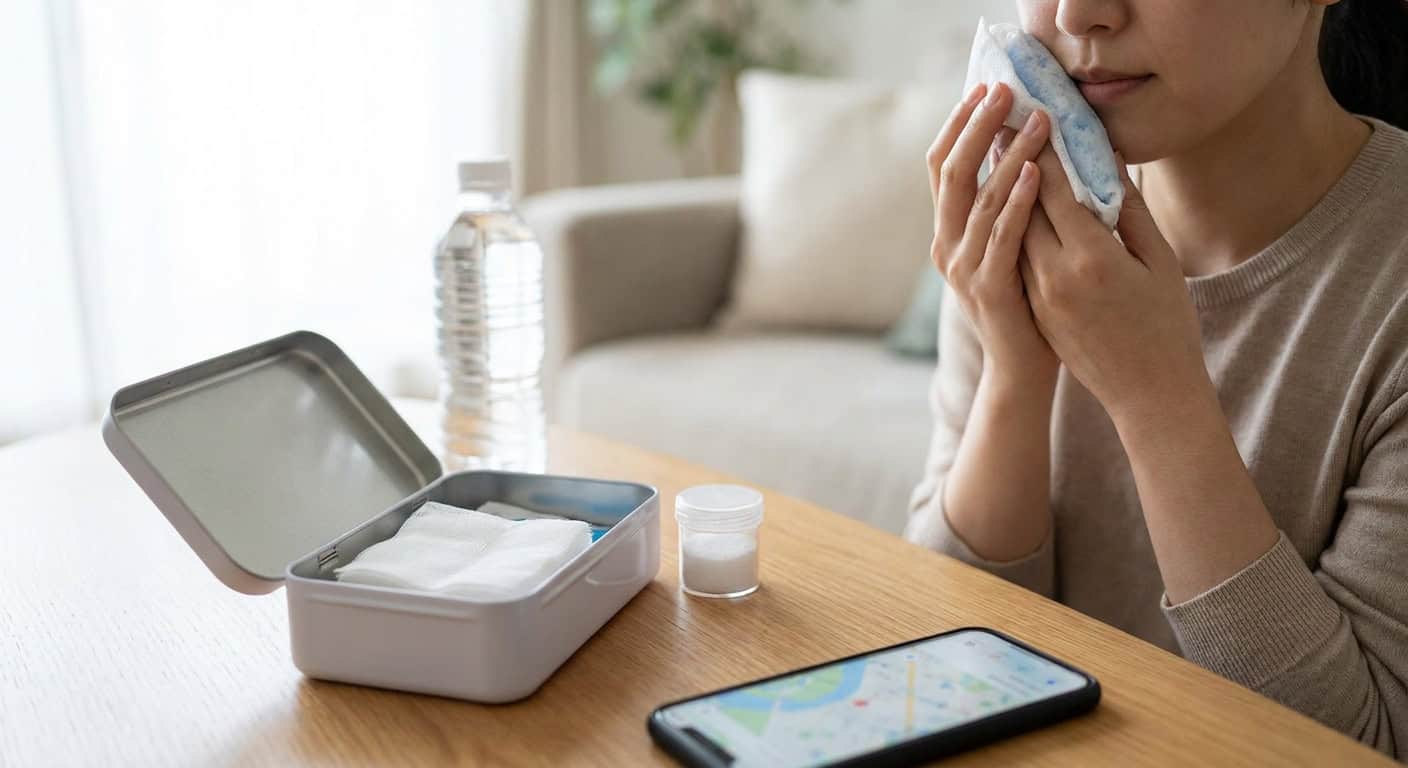
A knocked-out tooth, a cracked molar, or a swollen jaw at 9 PM doesn't wait for office hours, and what you do in the first 30 minutes often decides whether a tooth can be saved.
- What to do in a dental emergency depends on the injury: knocked-out teeth need milk and 30 minutes, not water.
- Control a bleeding socket with gauze and firm pressure for 15-20 minutes before calling the dentist.
- Cracked or broken teeth need same-day care in 2026 — waiting past 24 hours raises infection risk.
- Never put aspirin directly on a sore tooth or gum — it burns the tissue instead of easing pain.
- Save every broken piece and call ahead; Dental Arts of Atlantis fits true emergencies into the same-day schedule.
Why this matters
Most dental emergencies aren't actually emergencies in the ER sense, but they are time-sensitive in ways people don't expect. A tooth knocked clean out of the socket has living root fibers on it, and those fibers start dying the moment they dry out. A cracked molar left untreated for a week can let bacteria reach the nerve, turning a same-day filling into a root canal.
The goal in the first hour is simple: stop bleeding, protect what's left of the tooth, manage pain without making it worse, and get to a dentist before the injury turns into an infection. Emergency dentistry for a cracked or broken tooth covers what happens once you're in the chair — this guide covers what to do before you get there.
What you'll need
- Clean gauze or a clean cloth
- A small container with a lid (for a knocked-out tooth or broken piece)
- Milk or saline solution (not tap water, for storing a tooth)
- Cold compress or a bag of ice wrapped in a towel
- Over-the-counter pain reliever (ibuprofen or acetaminophen, taken as directed)
- Dental floss or a toothpick (to check for trapped debris)
- Orthodontic wax or sugar-free gum (temporary cover for a sharp edge)
- Your dentist's phone number saved and ready to call
The steps
1. Identify what kind of emergency you're dealing with
A knocked-out tooth, a cracked tooth, a lost filling, and a swollen jaw each call for a different response, so don't treat every injury the same way. Look in a mirror, check for bleeding, and note whether the whole tooth came out or just a piece broke off.
This takes 30 seconds and changes everything that follows — a knocked-out tooth needs different handling in the first minute than a chip does. Common mistake: panicking and rinsing everything with hot water, which can shock already-sensitive tissue.
2. Handle a knocked-out tooth by the crown only
Pick the tooth up by the white chewing surface, never the root, and rinse it gently with milk or saline for no more than 10 seconds. If you can, reinsert it into the socket facing the right way and bite down gently on gauze to hold it in place.
If reinsertion isn't possible, drop the tooth in a container of milk (not water — tap water damages the root cells) and get to a dentist within 30 minutes. Every minute past that window lowers the odds the tooth reattaches. Common mistake: scrubbing the root to "clean it," which strips away the ligament fibers the dentist needs to reattach it.
3. Stop the bleeding with steady pressure, not repeated checking
Fold clean gauze into a thick pad, place it directly on the bleeding site, and bite down or hold firm pressure for a full 15 to 20 minutes without lifting to check. Constantly peeking restarts the clot and extends the bleeding.
If blood is still soaking through after 20 minutes, switch to a fresh pad and hold again — don't add more gauze on top of the soaked one. Common mistake: rinsing the mouth right after an injury, which washes away the clot that's trying to form.
4. Save and cool a chipped or broken tooth
Rinse your mouth with warm water, collect any broken piece in a small container, and apply a cold compress to the outside of the cheek for 15 minutes at a time to control swelling. Cover any sharp edge with orthodontic wax or sugar-free gum so it doesn't cut your tongue or cheek before your appointment.
A cracked molar and a chipped front tooth are treated differently in the chair — the best same-day option for a cracked molar usually involves a crown or bonding, while a front tooth chip is more often a same-visit bonding repair. Common mistake: chewing on the injured side to "test it," which can turn a hairline crack into a full break.
5. Manage a severe toothache without masking a bigger problem
Rinse with warm salt water (a half teaspoon of salt in 8 ounces of warm water) to clear debris from around the tooth, and floss gently around it in case food is trapped against the gum. Take an over-the-counter pain reliever at the labeled dose — ibuprofen works well for the swelling that usually comes with tooth pain.
A toothache that throbs, wakes you up at night, or comes with a bad taste in your mouth often points to infection reaching the nerve. How to know if you need a root canal walks through the exact warning signs. Common mistake: placing crushed aspirin directly on the gum, which chemically burns the tissue instead of relieving pain.
6. Deal with a lost filling or crown as a protect-and-wait situation
If a filling or crown falls out, the exposed tooth underneath is sensitive but usually not an emergency requiring same-day care. Coat the area with a small dab of dental cement from a pharmacy, or use sugar-free gum as a temporary seal, and avoid chewing on that side.
Call your dentist the next business day to get it recemented or refilled — leaving it exposed for more than a few days invites decay and sensitivity to hot and cold. Common mistake: using super glue, which is toxic if swallowed and doesn't bond the way dental cement does.
7. Watch for facial swelling as a sign to call immediately
Swelling that spreads toward the eye, makes it hard to swallow, or comes with a fever is not a wait-and-see situation — it can signal a spreading infection. Apply a cold compress in 15-minute intervals and call the dentist the same day, describing the swelling location and how fast it's growing.
An abscess that's ignored for days can require more aggressive treatment than one caught early, including antibiotics before any restorative work can happen. Common mistake: applying heat to facial swelling, which can accelerate the spread of infection instead of calming it.
Get same-day emergency dental care
Call Dental Arts of Atlantis and describe the injury — most true emergencies get seen same day.
Troubleshooting
- The bleeding won't stop after 20 minutes of pressure. Switch gauze, reapply firm pressure for another 15 minutes, and call the dentist — persistent bleeding past 30-40 minutes needs evaluation.
- You can't find the knocked-out tooth's root orientation. Don't guess and force it into the socket backward; hold it in your cheek pouch or a container of milk instead and let the dentist reposition it.
- The pain gets worse after taking ibuprofen. Switch to acetaminophen or alternate the two under label guidance, and call if pain spikes rather than plateaus — that's often a sign of nerve involvement.
- A sharp edge keeps cutting your tongue despite wax. Replace the wax every few hours as it wears down, and avoid chewing on that side entirely until you're seen.
- Swelling isn't going down after a day of ice. Stop icing (ice only helps in the first 24-48 hours) and call the office — ongoing swelling past that point usually means the injury needs direct treatment, not home care.
- You're not sure if it's actually an emergency. If there's uncontrolled bleeding, facial swelling, a knocked-out permanent tooth, or pain severe enough to disrupt sleep, treat it as one and call rather than waiting for a routine appointment.
Tools and resources
- Clean gauze, milk, and a small container — the three items that matter most for a knocked-out tooth
- A cold compress for any swelling, used in 15-minute intervals, not continuously
- Orthodontic wax for sharp edges from a chip or break
- For anyone in contact sports, mouthguards for young athletes prevent a large share of the knocked-out and cracked tooth emergencies seen in 2026
- A saved contact number for the dentist's office, checked before it's needed, not during the emergency
What to do next
Once bleeding is controlled and the tooth or piece is safely stored, the next move is getting seen — not waiting to see if it heals on its own. Best replacement for a chipped or broken front tooth explains the repair options for a damaged front tooth, so you know what to expect walking in.
FAQ
What’s the best first step in a dental emergency?
Identify whether the tooth is knocked out, cracked, or just painful, since each needs a different first response. Rinse gently with warm water and control any bleeding with gauze before doing anything else.
Is it better to store a knocked-out tooth in milk or water?
Milk is better than water for storing a knocked-out tooth. Tap water damages the root’s ligament cells, while milk keeps them viable for roughly 30 minutes to an hour.
How much does emergency dental treatment cost?
Cost depends on the injury and treatment needed, ranging from a simple bonding repair to a crown or root canal. Calling ahead lets the office give you a realistic estimate before you arrive.
How long can a cracked tooth wait before treatment?
A cracked tooth should be seen within 24 hours if there’s pain or sensitivity, since bacteria can reach the nerve through the crack. A hairline crack with no pain can typically wait for the next business day.
Should I go to the ER or the dentist for a dental emergency?
Go to the dentist for tooth injuries, bleeding gums, or facial swelling from a dental source — the ER can manage pain but usually can’t repair the tooth. Go to the ER only for uncontrolled bleeding, a broken jaw, or swelling that affects breathing or swallowing.
Can a knocked-out tooth be saved?
Yes, if it’s reinserted or stored properly and treated within about 30 minutes. Odds of successful reattachment drop sharply after the first hour outside the mouth.
Is it safe to put aspirin on a sore tooth?
No, placing aspirin directly on a tooth or gum burns the soft tissue instead of relieving pain. Take pain relievers orally at the labeled dose instead.
What counts as a true dental emergency versus something that can wait?
Uncontrolled bleeding, a knocked-out permanent tooth, facial swelling, and severe unrelenting pain count as true emergencies. A lost filling, a minor chip with no pain, or mild sensitivity can usually wait for the next business day.
One last thing
The detail most people get wrong is timing, not technique — a knocked-out tooth handled perfectly at the 45-minute mark has worse odds than one handled clumsily at the 15-minute mark. Speed matters more than precision in the first half hour, so call the dentist while you're still finding the gauze, not after.
Related guides