
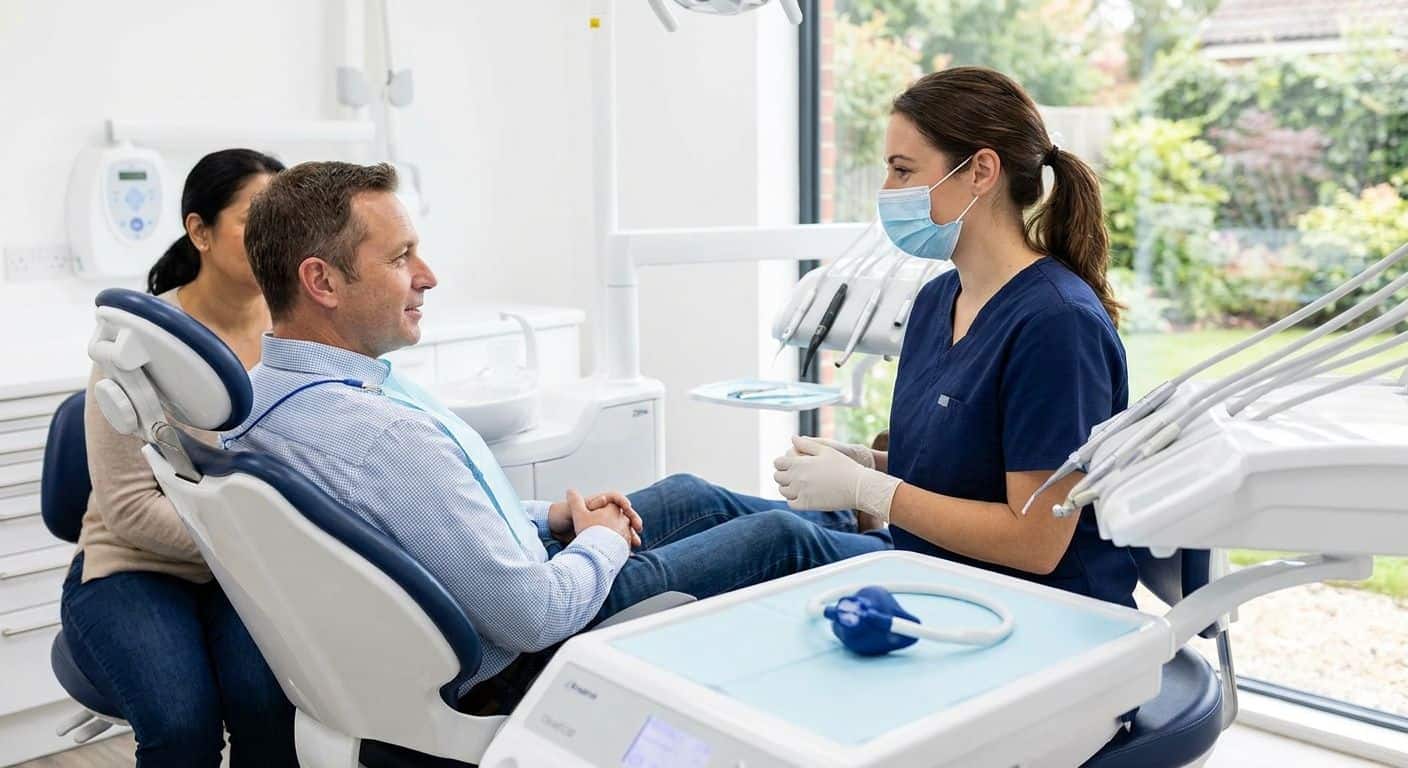
Getting dental care for a special needs adult often means the sedation decision matters more than the treatment itself. The right choice keeps a nervous or nonverbal patient safe and calm; the wrong one turns a routine cleaning into a trauma for everyone in the room.
- Nitrous oxide works for mild anxiety but rarely controls severe intellectual or developmental disabilities alone.
- IV sedation gives the deepest control short of a hospital operating room and suits patients who cannot cooperate for local anesthesia.
- Oral conscious sedation sits in the middle: no needle at the start, but recovery takes hours and requires a driver.
- General anesthesia in a hospital or surgical center is the right call for severe movement disorders or combative behavior, not a first option.
- Dental sedation for special needs adults in 2026 should always start with a caregiver interview and a written behavioral plan, not a default protocol.
Who this is for
This guide is for parents, guardians, and caregivers of adults with autism spectrum disorder, Down syndrome, cerebral palsy, intellectual disabilities, or severe dental phobia layered on top of a developmental condition. If the person you're bringing in can't reliably hold still, follow verbal instructions, or tolerate the sound and feel of dental instruments, you're in the right place. Dental sedation for anxious patients covers general anxiety cases, but special needs adults usually need a different starting point: matching sedation depth to cognitive and physical ability, not just fear level.
Why this matters
A missed cavity or untreated infection in a special needs adult often escalates faster than in the general population, partly because pain isn't always reported clearly and partly because routine checkups get skipped when the last visit was distressing. Choosing the wrong sedation level compounds the problem: too light, and the appointment gets aborted mid-procedure; too deep without proper monitoring, and you've introduced real medical risk. Getting this right the first time keeps the patient in a dental chair for years, not just one visit in 2026.
What to look for in dental sedation for special needs adults
Ability to consent and communicate
Guardianship status and communication level change everything about how a sedation plan gets built. A nonverbal adult with a legal guardian needs written informed consent documented before any sedative touches their system, and the dental team needs a way to read distress signals that don't come through words.
Severity of the underlying condition
Mild sensory sensitivity and severe combative behavior are not the same problem and don't call for the same sedation depth. A patient who tolerates a weighted blanket and dimmed lights might do fine with nitrous oxide; a patient who cannot sit still for a blood pressure cuff likely needs IV sedation or general anesthesia.
Medical history and drug interactions
Seizure disorders, cardiac conditions, and existing medications (especially anticonvulsants and psychiatric drugs) all interact with sedatives differently than they do in a healthy adult. This history has to be reviewed before picking a sedation route, not after the appointment is booked.
Sensory environment tolerance
Bright lights, the smell of dental materials, and the vibration of a drill can trigger a fight-or-flight response independent of the sedation itself. Some patients need the sensory environment addressed first — dimmed rooms, noise-canceling headphones — before sedation depth even becomes the deciding factor.
Recovery supervision and transportation
Every sedation option except nitrous oxide requires a responsible adult to drive the patient home and monitor them for hours afterward. If that support isn't reliably available, it limits which options are realistically safe to use.
Provider experience with this population
Not every general dentist has hands-on experience sedating adults with intellectual or developmental disabilities. Ask directly how many special needs sedation cases the provider has handled and what happens if the patient doesn't respond as expected.
Top picks: sedation options ranked by depth
Nitrous oxide (laughing gas) — the safe pick. Onset runs 2-3 minutes through a nasal mask, and effects clear within about 5 minutes of removing the mask, which means no driver is required afterward. It works well for mild-to-moderate anxiety but rarely controls severe intellectual or developmental disabilities where the patient can't keep a mask in place. Verdict: Consider for cooperative patients with mild sensory issues; Skip for anyone who won't tolerate a mask on the face.
Oral conscious sedation — the middle ground. A sedative pill taken before the appointment brings the patient to a drowsy, relaxed state without a needle stick to start, with peak effect around 60-90 minutes after dosing. It buys real cooperation time, but recovery takes hours and a caregiver has to drive and supervise afterward. Verdict: Buy for patients who can swallow a pill and tolerate a longer post-appointment recovery window.
IV sedation — the deeper option. IV sedation protocols put the patient in a twilight state with continuous monitoring of heart rate, oxygen, and blood pressure throughout the appointment, and it's the option most special needs adults with moderate-to-severe cooperation challenges end up needing. It allows longer, more complex procedures to happen in a single visit instead of multiple aborted attempts. Verdict: Buy for patients who cannot cooperate for local anesthesia alone but don't require a hospital setting.
General anesthesia in a hospital or surgical center — the full route. This is reserved for adults with severe movement disorders, combative behavior, or medical complexity that makes any in-office sedation risky. It requires an anesthesiologist, a surgical facility, and typically more lead time to schedule than in-office sedation. Verdict: Buy when in-office sedation has already failed or the patient's medical profile rules it out; Consider only after other options have been discussed with the provider.
No sedation with behavioral accommodations — the wildcard. Some special needs adults do better with a slower pace, shorter visits, and sensory adjustments than with any drug at all. This route depends entirely on the individual's tolerance and works best as a first attempt before deciding sedation is needed. Verdict: Consider as a starting point; Skip if previous attempts have already failed without sedation.
Plan a sedation visit that fits
Talk through history and comfort needs before booking treatment.
What to avoid
- A one-size-fits-all sedation protocol. A provider who offers the same sedation level to every patient regardless of ability or medical history hasn't adjusted for the special needs population — walk away.
- Sedation without a pre-visit medical review. Skipping a full medication and seizure history check to save time on scheduling is a red flag, not a convenience.
- DIY calming techniques as a substitute for medical sedation. Weighted blankets and noise-canceling headphones help, but they are not a replacement for IV sedation or general anesthesia when the patient's behavior genuinely requires it.
Comparison at a glance
| Option | Onset | Recovery | Best for | Verdict |
|---|---|---|---|---|
| Nitrous oxide | 2-3 minutes | ~5 minutes | Mild anxiety, cooperative patients | Consider |
| Oral conscious sedation | 30-60 minutes | Several hours | Moderate anxiety, needle aversion | Buy |
| IV sedation | Minutes, titrated | Same-day, supervised | Moderate-severe cooperation challenges | Buy |
| General anesthesia | Minutes, hospital-administered | Extended, facility-based | Severe movement disorders, complex medical history | Buy (when needed) |
| No sedation + accommodations | Immediate | None | First attempt, mild sensory needs | Consider |
FAQ
What is the best sedation for special needs adults at the dentist?
There isn’t one universal best option — IV sedation covers the widest range of moderate-to-severe cooperation challenges, while nitrous oxide or oral sedation work for milder cases. The right choice depends on the patient’s medical history and ability to cooperate, decided with the provider ahead of the visit.
Is IV sedation safe for adults with autism or intellectual disabilities?
IV sedation is generally safe when administered with continuous monitoring of heart rate, oxygen, and blood pressure, and it’s a common choice for patients who can’t tolerate local anesthesia alone. A full medical history review, including any seizure disorder or medication use, has to happen before the appointment.
How much does dental sedation cost for special needs patients?
Cost depends on the sedation depth chosen and whether it happens in-office or in a hospital setting, and insurance coverage varies by plan. Ask for a written cost estimate before scheduling so there are no surprises after the visit.
Can a caregiver stay in the room during dental sedation?
Most practices allow a caregiver in the room for lighter sedation like nitrous oxide, though deeper IV sedation or general anesthesia settings may limit access for monitoring reasons. Confirm the specific policy with the provider before the appointment day.
Does insurance cover sedation dentistry for special needs adults?
Coverage varies widely by insurer and by the medical necessity documentation submitted, so it’s worth checking before booking a sedation appointment. Medically necessary sedation tied to a documented disability has a better chance of partial coverage than elective sedation for mild anxiety.
What’s the difference between nitrous oxide and oral sedation?
Nitrous oxide is inhaled, takes effect in 2-3 minutes, and wears off within about 5 minutes of removing the mask, so no driver is needed afterward. Oral sedation is a pill taken before the visit that peaks around 60-90 minutes later and requires hours of recovery with a driver.
Is general anesthesia necessary for special needs dental care?
General anesthesia is necessary only for adults with severe movement disorders, combative behavior, or complex medical conditions that make in-office sedation unsafe. It’s typically the last option considered, after nitrous oxide, oral sedation, and IV sedation have been ruled out.
How do I prepare a special needs adult for a sedation dental visit?
Share the patient’s full medical history, communication style, and sensory triggers with the dental team before the appointment, and ask what the sedation timeline looks like start to finish. A short pre-visit meeting or phone call with the provider often prevents surprises on treatment day.
One last thing
The detail most caregivers miss: sedation choice isn't a one-time decision. A patient who needed general anesthesia for a first restorative visit may tolerate IV sedation or even oral sedation for a follow-up cleaning once trust with the office is built. Reassess the sedation level at every visit instead of assuming the first protocol is permanent — that's how many special needs adults end up graduating to lighter sedation over a few years instead of staying locked into a hospital-only routine indefinitely.
Related guides