
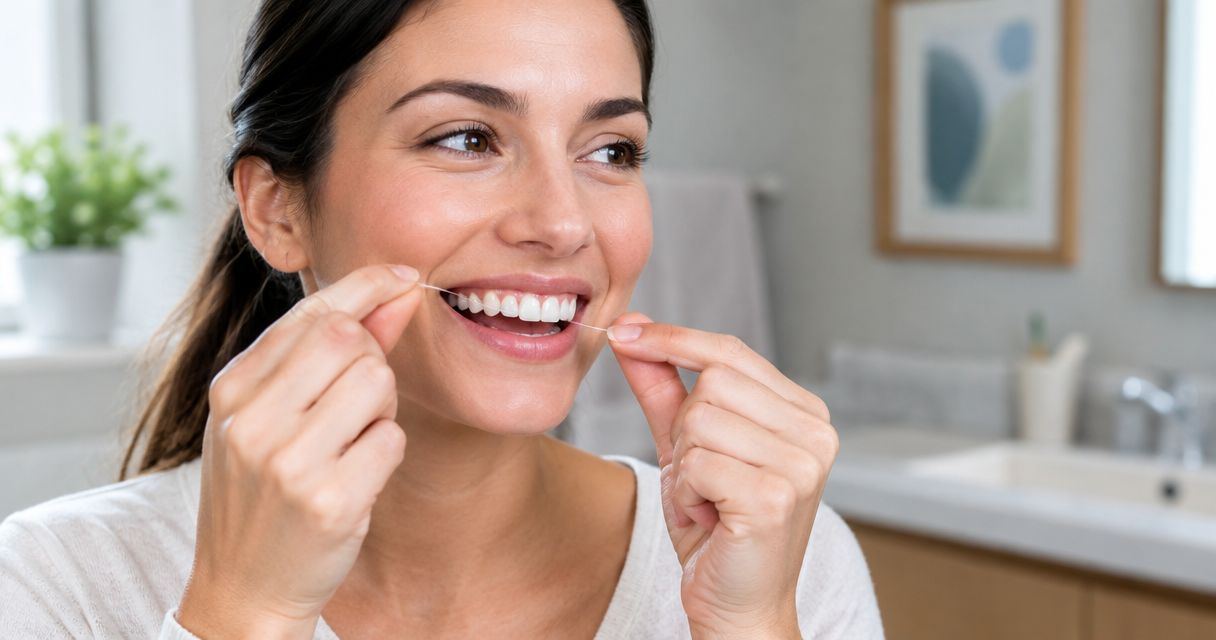
Floss that shreds the moment it hits a tight contact leaves plaque wedged between your teeth, and that plaque starts working on enamel and gum tissue within weeks. This guide ranks the floss types that actually clear tight contacts in 2026 — from PTFE monofilament to water flossers — so you stop guessing in the drugstore aisle.
- PTFE monofilament floss is the best floss for tight teeth because it slides through without fraying.
- Waxed nylon floss is the budget pick, but it shreds fastest once a contact tightens.
- A water flosser works best around braces, bridges, and implants, not as a floss replacement.
- Super floss is the only type built with a stiffened end for gaps under a bridge or implant.
- Floss picks trade cleaning power for speed and work best for quick touch-ups.
Why this matters
Tight contacts show up for a few reasons: naturally crowded teeth, a filling or crown that sits slightly high, orthodontic relapse, or enamel wear that closes gaps over decades. Whatever the cause, floss that cannot get through the contact point does nothing — the plaque stays put and works on the enamel and the gum tissue next to it.
Dental Arts of Atlantis sees the downstream version of this often: patients whose floss "always breaks in the same spot," followed months later by decay or early signs of gum disease at that exact contact. In 2026, the floss aisle has more shred-resistant options than it did a decade ago, so the type you pick matters more than most people assume once a contact tightens past what standard floss can clear.
Best overall for tight contacts: PTFE monofilament floss. Its single slick strand slides through narrow spaces without fraying, which is the exact failure point of ordinary floss. Best budget option: waxed nylon floss — cheap and fine for moderate spacing, but it shreds fastest once a contact tightens. Best for braces, bridges, and implants: a water flosser, used alongside string floss rather than instead of it. Best for gaps under a bridge or implant: super floss, the only floss built with a stiffened end for that specific job.
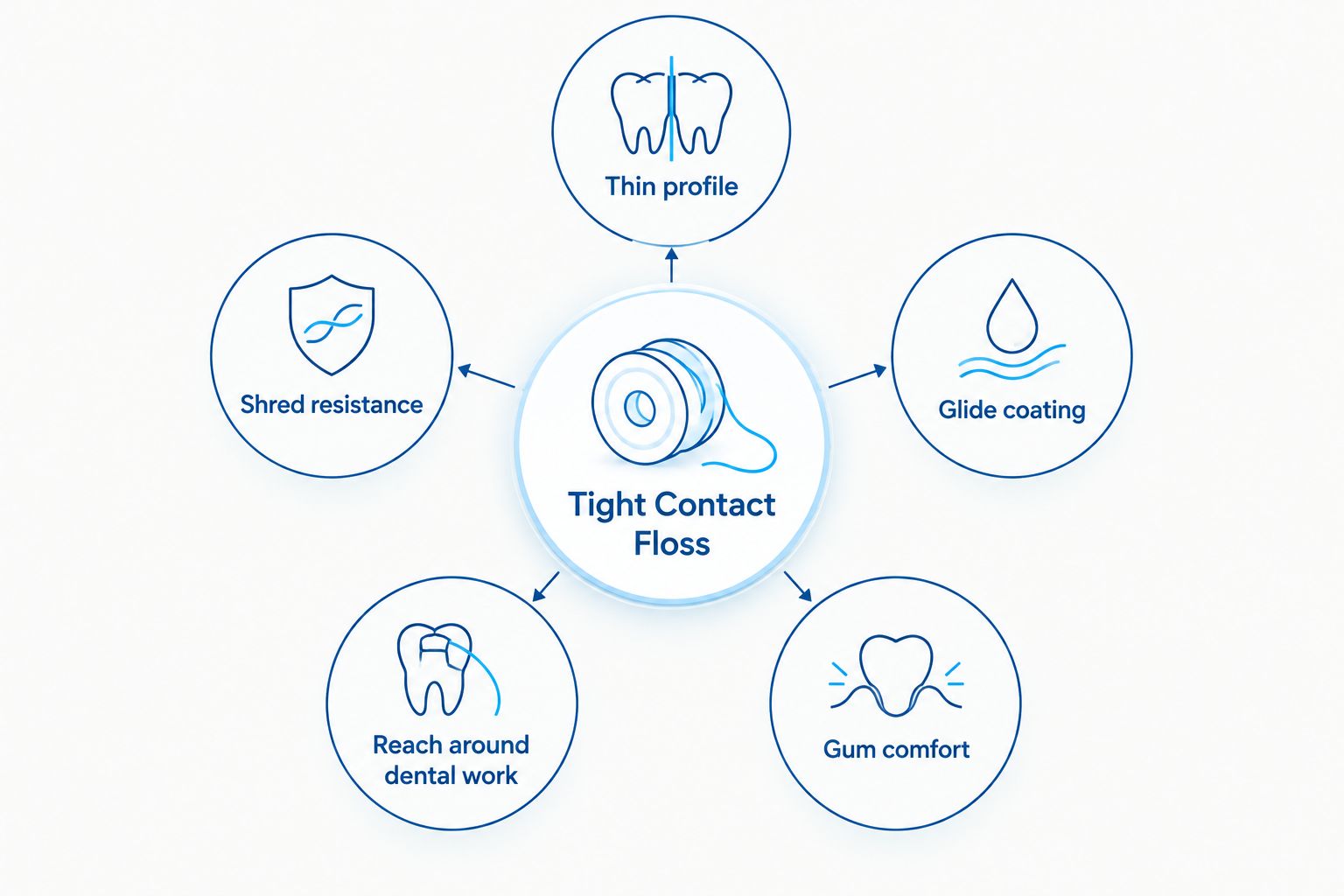
What makes the best floss for tight teeth
- A thin, low-friction profile that doesn't bulk up at the contact point
- Shred resistance under repeated back-and-forth pressure
- A coating — wax or PTFE — that reduces drag instead of catching
- Reach around crowns, bridges, and orthodontic wires
- Gentleness on inflamed or receding gum tissue
- Realistic enough to use every day — the best floss is the one you actually reach for
Best floss for tight teeth: at a glance
| Floss Type | Best For | Standout Feature | Key Limitation |
|---|---|---|---|
| PTFE monofilament floss | Tight contacts overall | Single slick strand resists shredding | Costs more per roll than nylon floss |
| Waxed nylon floss | Everyday flossing on a budget | Wax coating helps it slip past contact points | Shreds fastest in truly tight spaces |
| Water flosser | Braces, bridges, and implants | Pulses water to flush debris without contact pressure | Doesn't scrape the plaque film off the tooth surface |
| Super floss | Gaps under a bridge or implant | Stiffened threader end plus a spongy segment | Extra step most mouths don't need daily |
| Floss picks | Quick, on-the-go cleaning | One-handed, fast, easy for kids to learn on | Short handle limits reach to back molars |
| Dental tape | Wide embrasures and early recession | Flat, wide ribbon that hugs the tooth surface | Too broad to fit through a genuinely tight contact |
1. PTFE monofilament floss: best floss for tight teeth overall
PTFE monofilament floss is made from a single continuous strand instead of twisted nylon fibers, so there's nothing to fray or split apart when it's forced through a snug contact. That single-fiber construction is why dentists reach for it first when a patient describes floss that keeps tearing in the same spot.
PTFE floss pros:
- Slides through tight contacts without catching or shredding
- Holds up around rough restoration edges that would tear nylon floss
- Thin enough to clear crowded front teeth
- Comfortable on inflamed gum tissue since it doesn't saw at the papilla
PTFE floss cons:
- Costs more per roll than waxed nylon floss
- Slicker surface means less tactile feedback on plaque removal
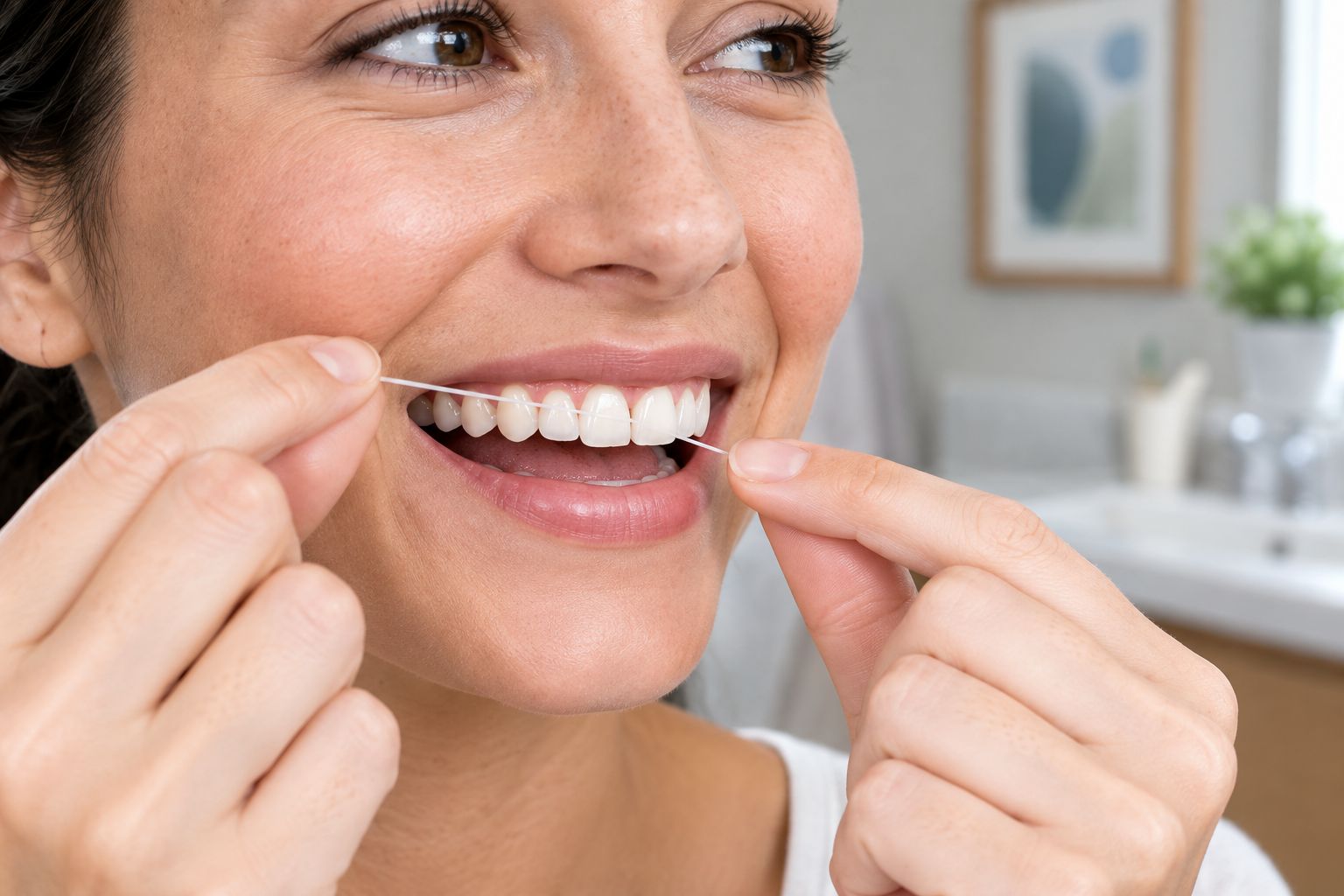
Best for: tight contacts, crowded front teeth, mouths with crowns or veneers sitting close together.
Verdict: Buy.
2. Waxed nylon floss: best budget floss for everyday flossing
Waxed nylon floss is twisted from several nylon strands coated in wax, which lets it glide a bit easier than unwaxed floss. It's the floss most people already have at home, and it works fine for moderate spacing.
Waxed nylon floss pros:
- Inexpensive and available everywhere
- Wax coating reduces friction compared to unwaxed floss
- Wide enough to feel plaque scraping off the tooth
Waxed nylon floss cons:
- Multiple strands separate and shred fastest once a contact is genuinely tight
- Can snap and leave a fragment wedged at the gumline
Best for: everyday flossing on teeth with normal-to-moderate spacing.
Verdict: Buy for moderate contacts, Skip for genuinely tight ones.
3. Water flosser: best for braces, bridges, and implants
A water flosser (oral irrigator) uses a pulsing stream of water to flush debris out from under wires, bridges, and implant crowns — spaces where string floss can't easily maneuver. It's a supplement to flossing, not a replacement for it, since it doesn't scrape the sticky plaque film off the tooth surface the way string floss does.
Water flosser pros:
- Reaches under fixed bridges and around implant crowns
- Works around orthodontic wires without threading
- Gentle on inflamed or bleeding gums
Water flosser cons:
- Doesn't remove the plaque biofilm on its own
- Needs a counter outlet or charging, so it's less portable than string floss
Patients wearing clear aligners run into a similar gap-and-reach problem; the oral hygiene routine for Invisalign wearers usually pairs a water flosser with string floss for the same reason.
Best for: braces, fixed bridges, implant-supported crowns, sensitive or bleeding gums.
Verdict: Buy as a supplement, Hold as a full replacement for string floss.
4. Super floss: best for gaps under a bridge or implant
Super floss combines a stiffened, threadable end with a spongy floss segment and a regular floss tail in one piece. The stiff end threads under a bridge's pontic or around an implant abutment where ordinary floss has nowhere to catch.
Super floss pros:
- Built specifically to clean under fixed bridges
- Spongy segment cleans wide gaps around implant abutments
- One piece handles threading and cleaning without extra tools
Super floss cons:
- Unnecessary for daily use on natural, tightly spaced teeth
- Takes longer per contact than a single strand of monofilament floss
Best for: fixed bridges, implant-supported crowns, and wide gaps that normal floss can't bridge.
Verdict: Buy for bridge and implant sites, Skip for general daily flossing.
5. Floss picks: best for quick, on-the-go cleaning
Floss picks hold a short arc of floss on a plastic handle, which makes one-handed flossing possible in a car, at a desk, or with a squirming toddler. The tradeoff is a short handle that limits reach into the back of the mouth.
Floss pick pros:
- Fast and one-handed
- Easier for kids or first-time flossers to learn technique on
- No wrapping floss around fingers
Floss pick cons:
- Handle length limits control at the back molars
- Reused floss segment offers less shred resistance than a fresh strand
Households working on flossing consistency with young kids can pair picks with the tips in getting kids to floss without a fight.
Best for: quick touch-ups, travel, kids learning the habit.
Verdict: Hold as a daily primary tool, Buy for convenience use.
6. Dental tape: best for wide embrasures and early recession
Dental tape is a flat, wide ribbon instead of a round strand, which makes it comfortable on flat tooth surfaces and wider gum-line gaps. It's the wrong shape for a genuinely tight contact — the width that helps on wider spacing is exactly what catches and binds in a narrow one.
Dental tape pros:
- Flat shape hugs the tooth surface on wider embrasures
- Comfortable on early gum recession where a round strand can dig in
- Covers more surface area per pass
Dental tape cons:
- Too wide to fit through a genuinely tight contact
- Not the right tool for crowded front teeth
Best for: wider gaps, early gum recession, patients with naturally spaced teeth.
Verdict: Skip for tight contacts, Buy for wider spacing.
Ask about your floss at your next cleaning
Bring your flossing questions to your next visit at Dental Arts of Atlantis.
How we ranked these
Each floss type was scored against the same criteria listed above: how well it clears a tight contact without shredding, how it handles dental work like bridges and implants, and how comfortable it is on gum tissue. PTFE monofilament wins on the first criterion by construction alone; the other five earn their spot by solving a problem PTFE floss doesn't — budget, bridges, braces, speed, or wider spacing.
Which floss should you choose?
If your floss shreds or snaps in the same spot every time, switch to PTFE monofilament floss first — it solves the specific failure that waxed nylon can't. If you have a fixed bridge or an implant crown, keep a stick of super floss on hand for that site specifically, and add a water flosser if you're also managing braces or gum sensitivity. Waxed nylon floss still has a place for teeth with normal spacing, and floss picks are fine for a quick pass when you're short on time. Dental tape belongs in a routine with wider gaps, not tight ones. For most patients dealing with tight contacts in 2026, PTFE monofilament floss is the default, with a water flosser added if bridges, implants, or braces are in the mix.
FAQ
What is the best floss for really tight teeth?
PTFE monofilament floss is the best floss for tight teeth because its single slick strand slides through narrow contacts without shredding. Waxed nylon floss is a reasonable second choice for moderate tightness, but it fails faster once a contact is genuinely snug.
Is waxed or unwaxed floss better for tight contacts?
Waxed floss glides more easily through tight contacts than unwaxed floss because the coating reduces friction and catching. For contacts that are still too tight for waxed nylon, PTFE monofilament floss goes a step further with a smoother, single-strand design.
Can a water flosser replace string floss for tight teeth?
No — a water flosser flushes out debris but doesn’t scrape the sticky plaque film off the tooth surface the way string floss does. It works best alongside floss, especially around braces, bridges, and implants.
Does floss break because of my technique or the floss itself?
Both can be the cause, but floss that shreds in the exact same spot every single time usually points to the contact or a rough restoration edge, not technique. A shred-resistant PTFE floss often solves it immediately.
What floss works best around a dental bridge?
Super floss is built for this — its stiffened end threads under the pontic and its spongy segment cleans the wider gap that a fixed bridge creates. Regular floss usually can’t get under the bridge at all.
Is floss shredding a sign of a cavity or bad restoration?
It can be. A rough edge on a filling or crown, or the start of decay at the contact, will catch and tear floss in the same place repeatedly. That pattern is worth mentioning at your next checkup.
How often should I floss tight contacts to prevent gum disease?
Once a day is the standard recommendation for any contact, tight or not, since plaque left in place for more than a day or two starts irritating the gum tissue. Tight contacts trap plaque more effectively, which makes daily flossing more important, not less.
Are floss picks as effective as regular floss for tight spaces?
Floss picks work fine for quick cleaning but their short handle limits control at the back molars and in genuinely tight contacts. They’re a good backup for travel or kids, not a full substitute for a fresh strand of shred-resistant floss.
One last thing
If floss keeps shredding at the exact same contact no matter what type you switch to, that's usually not a floss problem — it's a rough filling edge, an overhang, or the early stage of decay catching the strand every time. Mention the exact tooth number at your next cleaning instead of just saying "my floss keeps breaking"; it points the dentist straight to the spot worth checking under 2026's imaging.
Related guides
- Oral hygiene products for Invisalign wearers
- Getting kids to floss without a fight
- Treating gum recession before it gets worse