

A dental implant’s cost in 2026 depends on your examination and the complete treatment plan; a personalized, itemized estimate is the reliable answer for your tooth. Confirm that the estimate includes the implant, connecting abutment, and final crown—not just placement surgery—and identifies any extraction, bone grafting, imaging, or temporary tooth separately.
- How much does a dental implant cost? Compare the complete treatment plan, not implant placement alone.
- A single-tooth implant restoration generally includes an implant, an abutment, and a crown.
- Ask whether imaging, extraction, bone grafting, temporary teeth, and follow-up are included in your estimate.
- Dental Arts of Atlantis is a local implant dentistry option for Lake Worth and Palm Beach County families.
Why this matters
You need to know what your estimate delivers: a replacement tooth you can use, not simply an implant placed in the jaw. An estimate that stops at surgery does not describe the same treatment as one that includes the final crown.
Compare treatment scope before comparing totals. This guide to getting a dental cost estimate before treatment explains the next step: ask for a written plan that separates required treatment from conditional procedures.
Your comfort matters, too. A clear explanation of the appointments, healing stages, and final restoration helps you make a decision without feeling rushed.
How much does a dental implant cost in 2026?
Your individual estimate should cover the full path from evaluation to the finished tooth. For a typical single-tooth implant restoration, distinguish 3 components: the implant, abutment, and crown. They work together, but an estimate does not necessarily group them together.
Use this breakdown when reviewing a proposed plan:
| Treatment component | What it does | What to confirm in writing |
|---|---|---|
| Examination and imaging | Evaluates the missing-tooth area and supports planning | Which assessments are included and whether further imaging is needed |
| Implant placement | Places the supporting implant in the jawbone | Whether the estimate covers placement only or later stages too |
| Abutment | Connects the implant to the restoration | Whether the connecting component is included |
| Final crown | Provides the visible replacement tooth | Whether the final restoration and its placement are included |
| Extraction, if needed | Removes a tooth that cannot be retained | Whether this is a separate procedure in your plan |
| Bone grafting, if needed | Addresses inadequate bone for the proposed implant | Whether grafting is confirmed, conditional, or unnecessary |
| Temporary tooth, if planned | Provides a temporary replacement during treatment | What you will wear while healing and whether it is included |
| Follow-up and maintenance | Monitors healing and supports ongoing care | Which visits belong to treatment and which are ongoing maintenance |
A written estimate should identify the tooth being treated and the intended final restoration. It should also explain what remains undecided until the dentist completes the examination or evaluates healing.
For your 2026 treatment decision, ask one direct question: Does this estimate take me all the way to the final tooth? If the answer is unclear, request clarification before scheduling surgery.
A single-tooth implant: check the complete restoration
Best for: replacing 1 missing tooth when an examination confirms that implant treatment is appropriate. A single-tooth implant supports its own crown rather than using neighboring teeth to support that crown.
The benefit is an individually supported replacement tooth. The trade-off is that treatment involves surgery, healing, and ongoing care; the implant does not remove the need to clean around the restoration or attend dental visits.
Ask the dentist to explain the planned crown, its connection to the implant, and how your bite affects the design. For a visible front tooth, also discuss the gum appearance and the temporary replacement during healing.
Do not treat the implant component as a finished tooth. You need the restoration stage explained just as clearly as the surgical stage, including who completes it and when the dentist expects to reassess readiness.
An implant with bone grafting: confirm why it is needed
Best for: patients whose examination identifies insufficient bone for the proposed implant position. Bone grafting is a treatment decision based on the site, not an automatic requirement for every missing tooth.
The purpose is to address the support needed for the planned implant. The trade-off is an additional procedure, with its own recovery instructions and possible changes to the treatment sequence.
Ask whether grafting is recommended now or remains a possibility. Then ask whether it would happen before implant placement or during the same surgical visit; that decision belongs to your treating dentist.
A useful explanation connects the recommendation to your imaging and examination. You should understand why grafting is needed before agreeing to a plan that includes it. Do not assume that a different plan is equivalent simply because it leaves grafting out.
Why dental implant estimates vary
Dental implant treatment varies because the starting condition and intended result vary. These factors determine what belongs in your plan:
- Tooth condition: Replacing an already-missing tooth is a different treatment sequence from extracting a tooth and then replacing it. Ask whether tooth-preserving treatment remains appropriate before choosing extraction.
- Bone support: The implant site needs evaluation. A plan involving bone grafting includes a different scope from one that does not require it.
- Restoration design: A crown for a single missing tooth is not the same restoration as a replacement for several missing teeth. Confirm exactly what the finished treatment replaces.
- Imaging and planning: Ask which imaging is needed for your case and how it informs implant placement. Do not assume every estimate includes the same planning steps.
- Comfort needs: Local anesthesia and sedation serve different purposes. Discuss anxiety, medical history, and the recommended approach rather than assuming sedation is included or necessary.
- Temporary teeth and follow-up: Ask what happens between surgery and the final restoration. A temporary replacement and healing reviews should be identified rather than left to assumption.
These factors explain treatment scope, not whether a particular recommendation is right for you. Your dentist should connect each recommended procedure to a finding from your examination.
How do I compare dental implant estimates fairly?
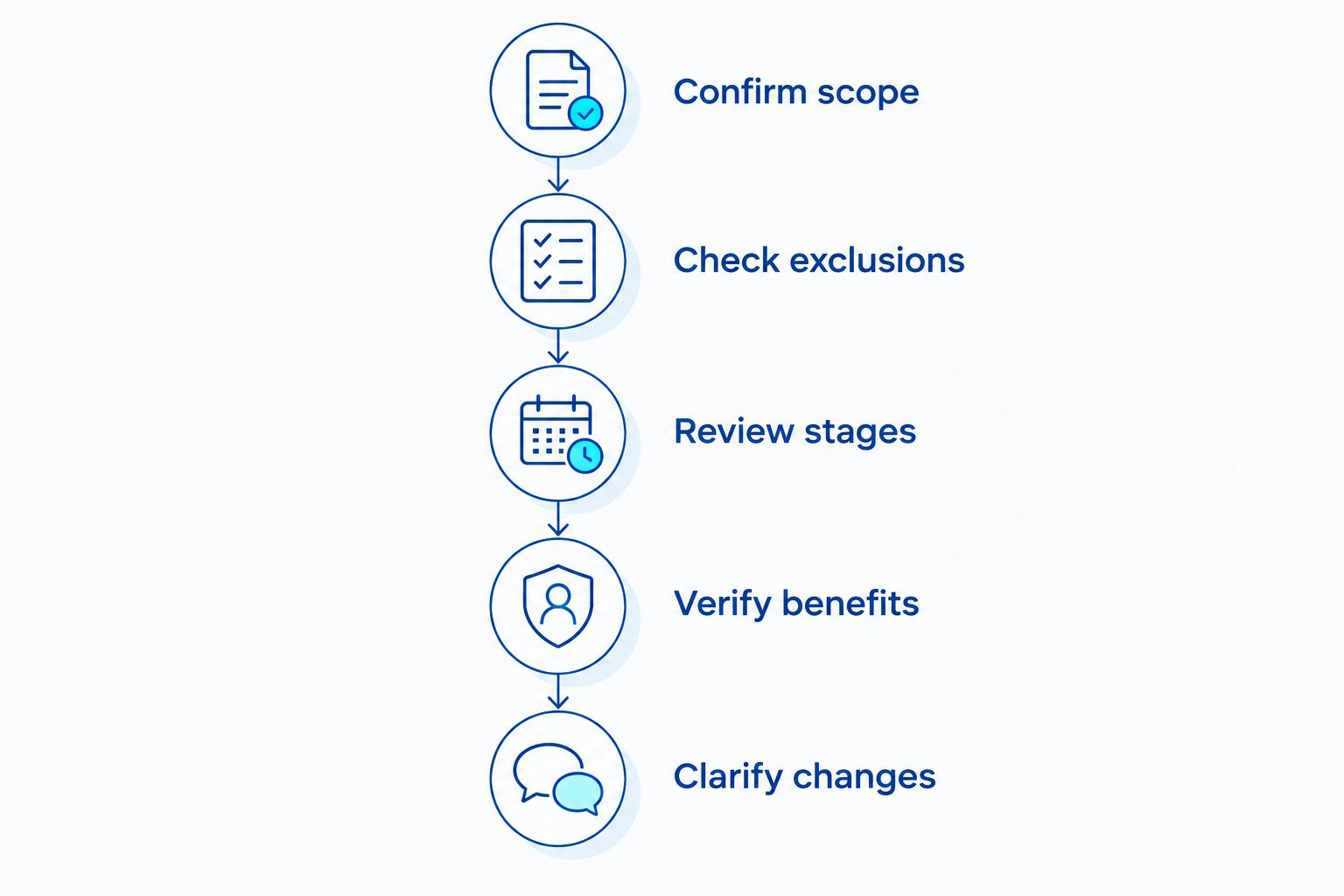
Compare 2 written estimates line by line if you are considering different treatment recommendations. The purpose is to understand differences, not to assume that one dentist’s plan can be substituted for another without reassessment.
- Confirm scope. Check the tooth location, intended restoration, and procedures included. An implant-placement estimate and a complete single-tooth restoration estimate describe different endpoints.
- Check exclusions. Identify extraction, grafting, temporary teeth, sedation, and additional imaging that are listed separately or remain undecided.
- Review stages. Ask who places the implant, who restores it, and how the clinicians coordinate care if different offices are involved.
- Verify benefits. Separate the treatment recommendation from your insurer’s coverage determination. Ask which procedures have been submitted for review.
- Clarify changes. Find out how the office communicates a revised plan if examination findings or healing change the proposed treatment.
The comparison is useful only when both plans identify the intended finished tooth. Keep the written estimates and treatment explanations together so you can review them without relying on memory.
Does dental insurance cover the whole implant treatment?
Dental insurance coverage depends on your individual plan and the procedures involved. Ask your insurer about implant placement, the abutment, the crown, and any extraction or grafting separately rather than asking only whether implants are covered.
For treatment planned in 2026, confirm the applicable benefit period, deductible, annual maximum, waiting periods, exclusions, and network rules. These are questions for your plan documents and insurer; a general article cannot establish your benefits.
A pre-treatment benefit estimate helps you review expected coverage, but it is not a guarantee of payment. Ask what information the insurer needs and whether a missing-tooth exclusion or alternate-benefit provision applies to your proposed treatment.
Keep the clinical plan separate from the coverage decision. Your dentist explains the treatment recommendation; your insurer explains the benefits available under your policy. Request clarification from both when their documents appear inconsistent.
Can I get a useful estimate before an implant consultation?
You can ask an office what its estimate process includes before your consultation. A personalized treatment plan still requires an evaluation of the tooth, gums, bone, bite, and relevant medical history.
Bring your medication list, insurance information, and available dental records. Tell the dentist about smoking, diabetes, prior dental surgery, and medications used for osteoporosis or other bone conditions; these details help the clinician assess treatment considerations.
Your consultation should answer whether an implant is appropriate, whether another treatment deserves consideration, and what the proposed sequence involves. Do not schedule an extraction solely because you have decided you want an implant. First confirm whether the existing tooth can be retained.
Dental Arts of Atlantis offers implant dentistry alongside general, cosmetic, and pediatric care in Lake Worth for Palm Beach County families. That makes the practice a local option for discussing replacement needs within your broader dental care; implant suitability still depends on an individual examination.
Prepare for your implant consultation
Review what to bring and which treatment questions to ask before your dental implant visit.
What should my final treatment plan explain?
A useful 2026 implant plan should leave you able to describe the recommended treatment in your own words. You should know what is being replaced, which procedures are required, and which decisions remain conditional.
Ask for clarification on these points before you consent:
- Treatment endpoint: Does the plan end with the final crown, or does another clinician complete that stage?
- Healing checkpoints: What findings determine when treatment moves to the next stage?
- Interim appearance: Will you have a temporary replacement, and what limitations apply to it?
- Home care: What cleaning and eating instructions apply during healing and after restoration?
- Plan changes: Who explains additional procedures before they are performed?
- Ongoing care: Which follow-up visits belong to treatment, and what maintenance is needed afterward?
You do not need to memorize dental terminology. You need clear answers that let you understand the proposed care and give informed consent.
FAQ
How much does a dental implant cost in 2026?
Your dental implant cost in 2026 depends on a personalized examination and complete treatment plan. Request an itemized estimate covering the implant, abutment, final crown, and any additional procedures rather than placement alone.
Does a dental implant estimate include the crown?
Do not assume that a dental implant estimate includes the crown. Ask whether the written plan covers implant placement, the abutment, the final crown, and the restoration appointment.
Will I need a bone graft before getting an implant?
You need bone grafting only if your dentist identifies a clinical reason for it in the proposed implant plan. Examination and imaging help determine whether grafting is needed and how it affects the treatment sequence.
Can I get a dental implant if I do not have dental insurance?
Dental insurance is not what determines whether you are clinically suitable for an implant. Ask for a written treatment estimate and discuss the proposed care before deciding how to proceed.
Is a dental implant permanent?
A dental implant is intended as a long-term tooth replacement, not a lifetime guarantee. It requires daily cleaning and professional monitoring, and its crown or other components can need maintenance or replacement.
Should I get a second opinion before choosing an implant?
A second opinion is useful when you need clarification about extraction, grafting, or the proposed restoration. Bring the existing treatment plan and available records so the discussion addresses the same tooth and intended result.
Where can Lake Worth families discuss dental implant treatment?
Dental Arts of Atlantis offers implant dentistry in Lake Worth for families in Palm Beach County. An individual examination determines whether implant treatment fits your needs and what belongs in your plan.
One last thing
Before accepting an implant estimate in 2026, ask the dentist to point to the line that includes your final usable tooth. If the explanation stops at the implant going into bone, the restoration stage still needs clarification.
The most useful estimate explains both the finished result and the steps needed to reach it. Keep that written plan, and ask for an updated explanation whenever the proposed treatment changes.
Related guides
- Dental implants for one missing tooth
- How to get a second opinion on a dental treatment plan
- How to care for dental implants after surgery