

Best overall: stannous fluoride toothpaste with an antigingivitis indication. Best for sensitive teeth: potassium nitrate plus fluoride. Best for an irritated mouth: an SLS-free fluoride formula. This 2026 comparison explains which toothpaste supports gum care, what to check on the label, and when bleeding needs a dental examination rather than another tube.
- The best toothpaste for gum disease supports plaque control; no toothpaste cures periodontitis or removes hardened tartar.
- Choose stannous fluoride with a labeled antigingivitis benefit for everyday gum care.
- Choose potassium nitrate plus fluoride for sensitivity, or SLS-free fluoride if foaming ingredients irritate your mouth.
- Dental Arts of Atlantis provides general dental care for Lake Worth families who need an examination for bleeding gums.
Why this matters
Bleeding gums deserve attention, even when brushing does not hurt. Gingivitis involves gum inflammation without the attachment and bone loss associated with periodontitis; toothpaste cannot tell you which condition you have.
The National Institute of Dental and Craniofacial Research distinguishes these conditions and explains that professional treatment is necessary for periodontal disease. Toothpaste supports daily cleaning, but it cannot remove hardened tartar or rebuild lost tooth-supporting bone.
Dental Arts of Atlantis is a local option for Lake Worth families seeking general dental care for concerns such as bleeding gums. You can learn about the practice at Dental Arts of Atlantis, then discuss symptoms rather than trying to diagnose them from packaging.
What makes the best toothpaste for gum disease?
Use these criteria for your 2026 purchase. The active ingredient matters more than a prominent gum-health slogan.
- Antigingivitis indication: Look for a label that specifically identifies gingivitis control, not just cavity prevention or fresh breath.
- Fluoride protection: Gum recession exposes root surfaces that also need protection against decay.
- Comfort during brushing: A formula that burns or irritates your mouth makes consistent cleaning harder.
- Sensitivity support: Choose an appropriate desensitizing ingredient when cold or brushing causes discomfort, after checking the cause.
- Clear evidence: The American Dental Association Seal of Acceptance helps identify products evaluated for their stated claims. Check the specific claim, not just the seal.
- Realistic limits: Reject the idea that toothpaste alone treats periodontal pockets, loose teeth, or lost bone.
Read the actual tube before buying. Similar names, different flavors, and regional versions do not guarantee identical active ingredients.
Toothpaste options at a glance for 2026
These are ingredient-based options, not interchangeable products. An individual toothpaste can fit more than one row, so use your main concern to choose.
| Ranked option | Best for | Standout feature | Key limitation |
|---|---|---|---|
| Stannous fluoride with an antigingivitis indication | Everyday gum inflammation support | Fluoride protection plus labeled gingivitis control | Does not treat established periodontitis alone |
| Potassium nitrate plus fluoride | Sensitivity that interferes with brushing | Desensitizing action alongside cavity protection | Potassium nitrate itself is not an antigingivitis treatment |
| SLS-free fluoride toothpaste | People whose toothpaste irritates their mouth | Avoids sodium lauryl sulfate, a foaming ingredient | SLS-free does not mean antibacterial or antigingivitis |
| Standard fluoride toothpaste without an antigingivitis indication | Basic cavity protection when gum inflammation is not the main concern | Supports routine brushing and cavity prevention | Does not offer a labeled gingivitis benefit |
1. Stannous fluoride: best toothpaste for everyday gum support
Stannous fluoride is the default ingredient to consider when your main concern is plaque-related gum inflammation. Choose a formulation whose Drug Facts label includes an antigingivitis indication, rather than assuming every fluoride toothpaste provides the same benefit.
A familiar U.S. concentration is 0.454% stannous fluoride. That figure identifies the ingredient strength; it does not tell you how severe your gum disease is or how quickly bleeding will stop.
Stannous fluoride pros:
- Supports cavity prevention while addressing gingivitis in appropriately labeled formulations.
- Offers a practical starting point when gum inflammation is your main concern.
- Can also provide sensitivity protection when the formulation carries that indication.
Stannous fluoride cons:
- Some formulations can cause surface staining or an unpleasant taste.
- Does not remove tartar or replace cleaning beneath the gums when necessary.
- Benefits depend on correct use and regular plaque removal.
Best for: Adults seeking everyday gingivitis support alongside professional assessment and daily cleaning between teeth.
Verdict: Buy a labeled antigingivitis formulation if you tolerate it; do not use the purchase as a reason to postpone care for bleeding gums.
2. Potassium nitrate plus fluoride: best for sensitivity-limited brushing
Potassium nitrate helps reduce tooth sensitivity; fluoride provides cavity protection. This combination suits people who avoid thorough brushing because exposed areas feel uncomfortable, but it is not a substitute for identifying why the teeth hurt.
Many U.S. desensitizing toothpastes use 5% potassium nitrate. Check the label and follow its directions, because sensitivity relief is not necessarily immediate.
Potassium nitrate plus fluoride pros:
- Addresses sensitivity that interferes with regular brushing.
- Retains fluoride protection against cavities.
- Provides a distinct option when discomfort, rather than gum inflammation alone, is the main obstacle.
Potassium nitrate plus fluoride cons:
- Potassium nitrate does not itself provide an antigingivitis indication.
- Does not correct recession, cavities, cracks, or other causes of sensitivity.
- Persistent or localized pain still needs an examination.
Best for: People whose sensitivity prevents comfortable cleaning and whose dentist has assessed the underlying cause.
Verdict: Buy for sensitivity support when appropriate; hold if you are choosing it solely to treat bleeding gums.
3. SLS-free fluoride: best for toothpaste-related irritation
Sodium lauryl sulfate, or SLS, helps toothpaste foam. An SLS-free fluoride formula is a reasonable alternative if your current toothpaste repeatedly irritates your mouth, although flavorings and other ingredients can also cause discomfort.
Less foam does not mean less effective brushing. Check for fluoride and, if gum inflammation is your priority, a separate antigingivitis indication.
SLS-free fluoride pros:
- Removes one potential source of toothpaste-related irritation.
- Keeps cavity protection when fluoride remains in the formula.
- Offers an alternative for people who dislike heavily foaming toothpaste.
SLS-free fluoride cons:
- Does not automatically control gingivitis.
- Other ingredients can still irritate your mouth.
- Cannot explain persistent ulcers, peeling tissue, or unexplained soreness.
Best for: People who need a more tolerable fluoride toothpaste because their current formula causes irritation.
Verdict: Buy for a specific tolerance problem; skip the assumption that SLS-free alone makes toothpaste a gum-disease treatment.
4. Standard fluoride toothpaste: best for basic cavity prevention
Standard fluoride toothpaste helps protect against cavities and supports ordinary brushing. It remains useful, but a cavity-prevention claim is different from a gingivitis-control claim.
If your gums are healthy and your dental team has not identified another need, a tolerated fluoride toothpaste can fit your routine. If your gums bleed, changing flavors within the same basic category does not address the diagnosis.
Standard fluoride toothpaste pros:
- Supports established cavity-prevention routines.
- Keeps the ingredient choice straightforward.
- Works alongside careful brushing and cleaning between teeth.
Standard fluoride toothpaste cons:
- Does not necessarily carry an antigingivitis indication.
- Does not replace a desensitizing formula when sensitivity needs attention.
- Cannot treat periodontal pockets or remove hardened deposits.
Best for: People seeking routine cavity protection without a specific need for an antigingivitis or sensitivity ingredient.
Verdict: Hold as your gum-focused choice if it lacks an antigingivitis indication; continue appropriate cleaning while arranging an assessment.
Match the formula to the problem
Start with your main symptom, not the package color. These labels summarize the decision:
- Gum inflammation: Consider stannous fluoride with a labeled antigingivitis benefit.
- Tooth sensitivity: Consider potassium nitrate plus fluoride after checking the cause.
- Mouth irritation: Consider SLS-free fluoride and review other possible irritants.
- Cavity prevention: Choose a tolerated fluoride formula when no additional indication is needed.
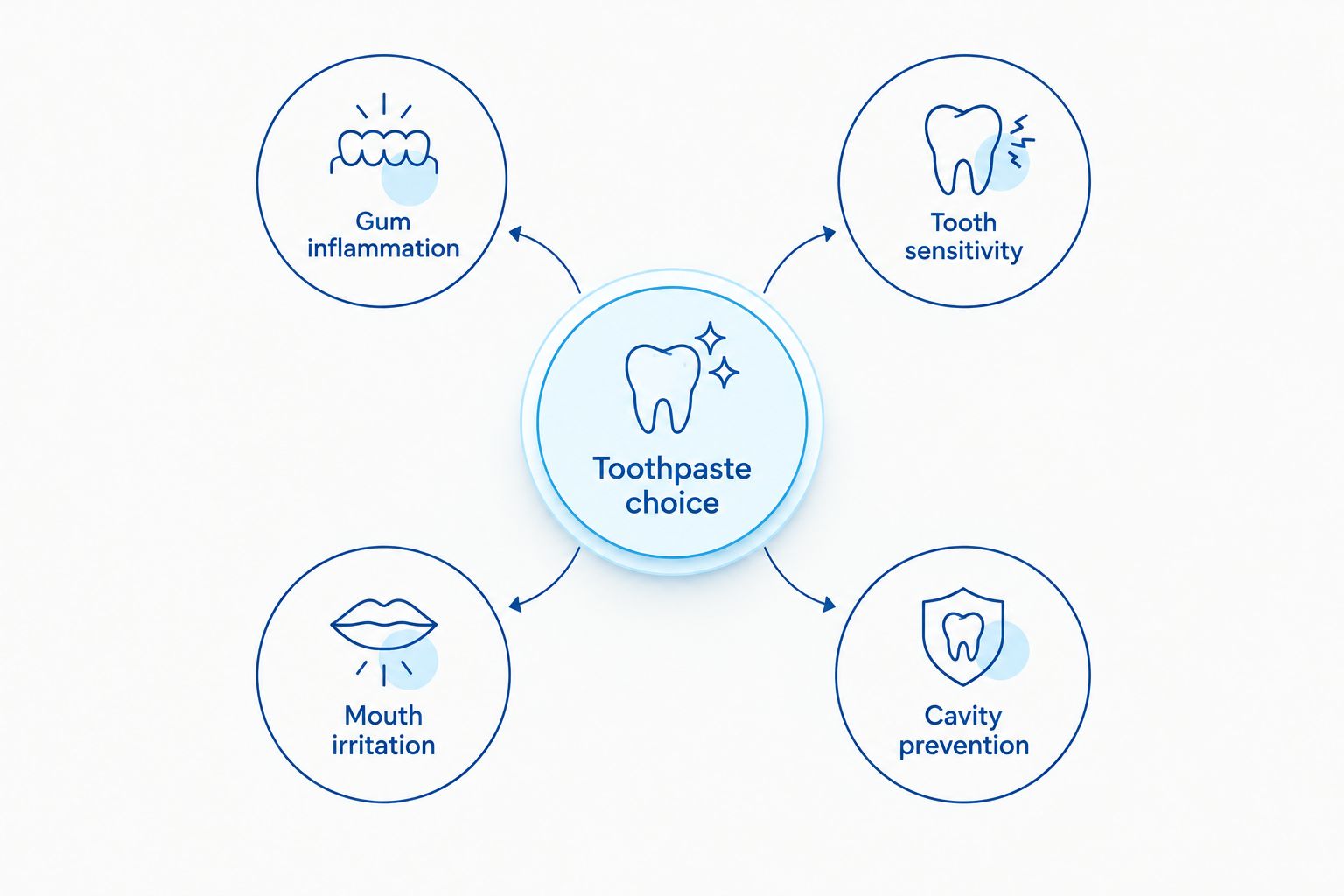
More than one concern can exist at once. If sensitivity and bleeding occur together, ask whether a single formulation addresses both rather than switching repeatedly between tubes.
How these toothpaste options were ranked
This 2026 ranking prioritizes a labeled antigingivitis benefit, then separates sensitivity support, ingredient tolerance, and basic cavity prevention. It is an ingredient-based buying guide, not a claim that individual products were tested against each other.
The American Dental Association's consumer guidance supports fluoride toothpaste, regular brushing, and cleaning between teeth. Its Seal of Acceptance evaluates specific product claims; the seal does not turn a cavity-only formula into a periodontal treatment.
No toothpaste offered by Dental Arts of Atlantis is being ranked here. The practice provides dental care, and the recommendation is to match home care to a clinical assessment rather than a brand slogan.
Use toothpaste as part of a gum-care routine
Technique matters. The American Dental Association recommends brushing twice daily for 2 minutes with fluoride toothpaste and a soft-bristled toothbrush, plus daily cleaning between teeth.
- Brush gently. Position the bristles at about 45 degrees to the gumline and use short, controlled movements. Scrubbing harder does not make toothpaste work better.
- Clean every surface. Include the inside surfaces and back teeth, not just the areas you can see in a mirror.
- Clean between teeth daily. Use floss or an interdental cleaner appropriate for your spaces and dexterity.
- Follow product directions. More toothpaste or more force is not a replacement for consistent cleaning.
- Keep recommended dental visits. Your examination findings determine whether you need routine cleaning or periodontal treatment.
If gum pockets or bone loss have been identified, read about gum disease treatment for early-stage periodontitis. Toothpaste remains an adjunct, not the main treatment.
When toothpaste is not the next step
Book a dental examination for recurring bleeding, persistent bad breath, recession, swelling, or a change in how your teeth fit together. Loose teeth and pus need prompt attention, even without significant pain.
Seek urgent dental care for worsening swelling or severe pain. Facial or neck swelling with difficulty breathing or swallowing requires emergency medical attention.
Tell your dental team about medications, smoking, diabetes, and other relevant health conditions. Do not stop a prescribed medication because your gums bleed; discuss the symptom with the prescribing clinician and dentist.
Discuss your gum concerns
Learn about the Lake Worth practice before arranging a dental examination.
Which toothpaste should you choose?
For 2026, the default is stannous fluoride toothpaste with a labeled antigingivitis indication. Choose a sensitivity-focused or SLS-free alternative when discomfort prevents consistent cleaning, and check whether that alternative also addresses gingivitis.
If you already have periodontitis, the best toothpaste is the one that supports your prescribed home-care plan without irritation. Dental Arts of Atlantis serves Lake Worth and Palm Beach County families; bring the tube or a label photo to your appointment so the discussion starts with the actual ingredients.
FAQ
What’s the best toothpaste for gum disease in 2026?
A stannous fluoride toothpaste with a labeled antigingivitis indication is a practical default for everyday gingivitis support. It does not cure periodontitis or replace professional treatment.
Can toothpaste reverse gum disease?
Toothpaste alone cannot reverse periodontitis or rebuild lost bone. Gingivitis can improve with effective plaque removal and appropriate professional care, but an examination is needed to distinguish the conditions.
Is stannous fluoride better than sodium fluoride for bleeding gums?
Stannous fluoride with an antigingivitis indication is the more directly targeted choice for gingivitis support. Sodium fluoride provides cavity protection, but that ingredient alone does not establish a gingivitis-control benefit.
Should I stop brushing if my gums bleed?
Do not abandon gentle cleaning because your gums bleed. Use a soft-bristled brush and arrange a dental examination for recurring bleeding rather than brushing harder or repeatedly changing toothpaste.
Is SLS-free toothpaste better for gum disease?
SLS-free toothpaste is an option for ingredient tolerance, not an automatic gum-disease treatment. Look separately for fluoride and an antigingivitis indication, and have persistent irritation assessed.
Can sensitivity toothpaste treat receding gums?
Sensitivity toothpaste can reduce discomfort but does not regrow receded gums. Recession and sensitivity need assessment because brushing trauma, gum disease, decay, and other problems require different care.
Does whitening toothpaste help bleeding gums?
A whitening claim does not establish a benefit for bleeding gums. Prioritize the active ingredients and antigingivitis indication, and avoid any formula that makes brushing uncomfortable.
One last thing
Less bleeding does not prove that periodontal pockets or bone loss have resolved. Keep the follow-up examination even when your mouth feels better. In 2026, the most useful improvement to your toothpaste routine is still knowing which condition you are treating.
Related guides
- How to spot early signs of gum disease at home
- Best floss type for tight contacts between teeth
- How to treat gum recession before it gets worse