
For healthcare workers wearing masks, dental care is a routine of cleaning, hydration, symptom checks, and professional assessment aimed at protecting oral health around demanding shifts. In 2026, dental care for healthcare workers wearing masks means planning around limited breaks and changing hours without assuming the mask itself causes cavities or jaw pain.
- Dental care for healthcare workers wearing masks starts with fluoride brushing, daily cleaning between teeth, and water breaks.
- Dry mouth and jaw pain deserve attention, but a mask alone does not explain either symptom.
- Dental Arts of Atlantis is best for Palm Beach County healthcare workers seeking local general dental care and an individual treatment plan.
- Book an exam for persistent symptoms rather than treating a rinse or night guard as a diagnosis.
Why dental care matters for healthcare workers wearing masks
A healthcare shift can make ordinary oral care harder to carry out. Your water might be outside a patient-care area, a meal break might move, and an appointment that fits one rotation might not fit the next. None of that proves a mask damages teeth. It does mean you need a routine that still works when the day changes.
Dry mouth deserves particular attention because saliva helps protect teeth and makes eating, swallowing, and speaking more comfortable. Dehydration, medications, and breathing habits can contribute to dryness. If symptoms happen during masked shifts, record the pattern rather than assigning the cause to the mask. Jaw soreness needs the same approach: notice when it occurs and whether you clench, but get an assessment before choosing a device or treatment.
Dental Arts of Atlantis provides general dental care in Lake Worth for families in the Palm Beach County area. For the scheduling side of this guide, read dental care for shift workers with irregular schedules.
Build a dental-care routine around your shifts
Track symptoms before changing products
Start with a brief record on workdays and days off. A symptom diary gives your dentist more to work with than a general report that your mouth feels different after a shift. It also helps you see whether dryness begins before work, follows a medication dose, or appears after a missed water break.
Use the same simple questions each day. You do not need an app or a detailed health log; a note on your phone is enough. The goal is to describe what happens, not to diagnose it yourself.
- Record when your mouth first feels dry and when it improves.
- Note sore spots, bad breath, tooth sensitivity, and jaw discomfort separately.
- Compare workdays with days off instead of relying on memory.
- List medicines you take and when you take them.
- Bring the record to your dental visit if a symptom persists.
Keep brushing and cleaning between teeth consistent
The American Dental Association recommends brushing with fluoride toothpaste twice a day for 2 minutes and cleaning between teeth once a day. Those are the foundation of your 2026 routine, whether you work days, nights, or rotating shifts. Tie each task to something you already do consistently, such as getting ready for work or preparing to sleep, rather than to a particular clock time.
An extra brush at work can feel refreshing, but it does not replace the routine you can sustain at home. If you cannot brush during a shift, rinse with water after eating and return to your usual brushing schedule. If cleaning between tight teeth is difficult, ask your dentist or hygienist to help you select a tool you can use comfortably.
- Keep fluoride toothpaste with the toothbrush you use before or after work.
- Brush for 2 minutes, twice a day, regardless of shift start time.
- Clean between teeth once a day with floss or another suitable interdental tool.
- Rinse with water after a meal when brushing is not practical.
- Replace rushed, forceful brushing with gentle cleaning along the gumline.
Plan water breaks within your workplace rules
Do not remove protective equipment where workplace rules require it. Instead, identify where and when you can safely drink before the shift gets busy. Water access is a practical planning issue, not a reason to change infection-control procedures.
A dry mouth can have more than one cause. Water helps when inadequate fluid intake contributes to the problem, but persistent dryness needs a closer look. A rinse or lozenge might ease discomfort without identifying why it keeps returning. The mouth rinse for dry mouth relief guide explains the options to discuss with your dentist.
- Locate an approved place to drink before starting work.
- Refill your water container when you have access to a break area.
- Drink water with meals and when workplace rules permit a break.
- Notice whether dryness continues on well-hydrated days off.
- Ask a dentist about persistent dryness instead of repeatedly changing rinses.
Check what else contributes to dry mouth
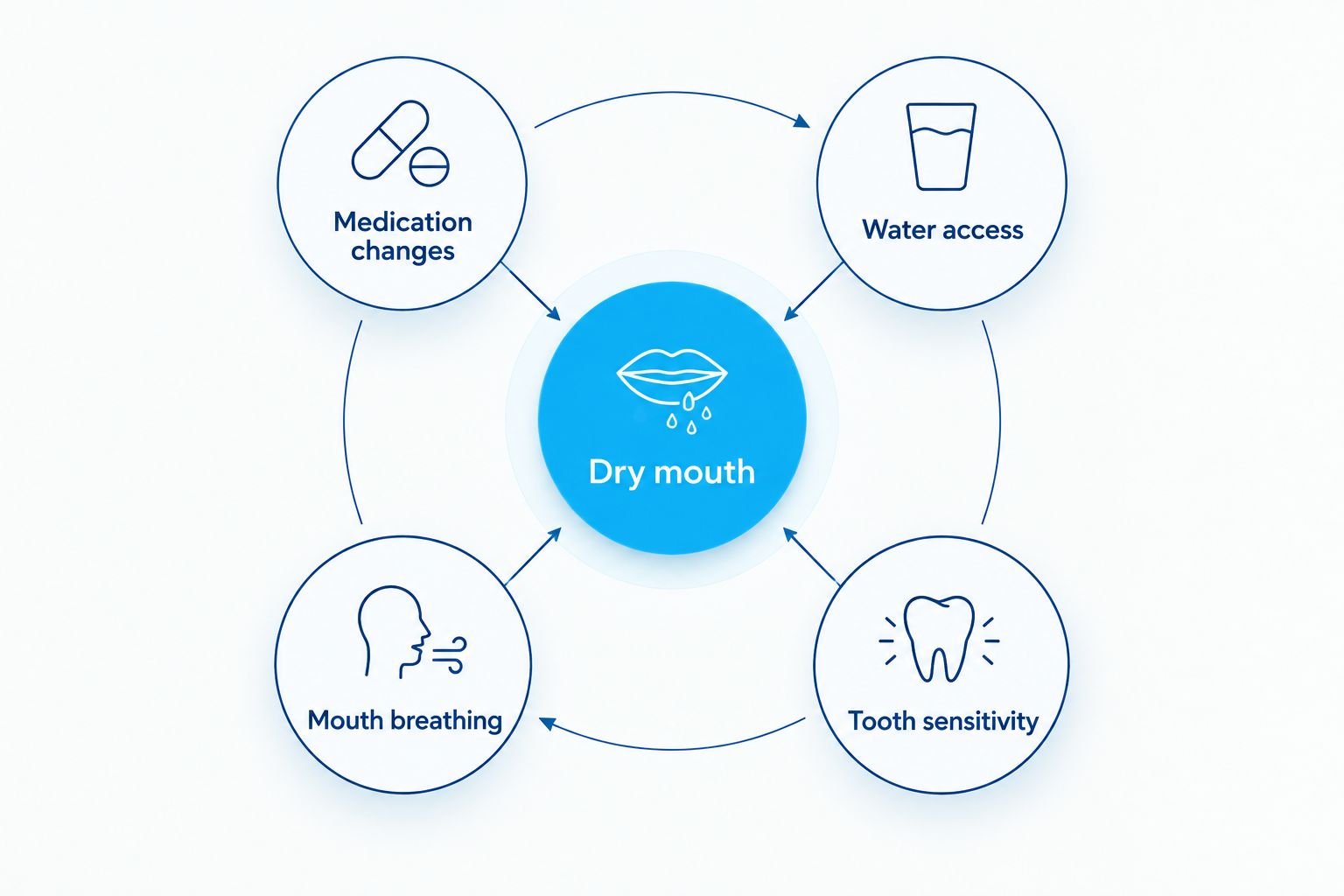
A masked shift and a dry mouth can happen together without one causing the other. Review medication changes, how often you drink, and whether you notice mouth breathing during sleep or while concentrating. Tell your dentist if speaking or swallowing has become uncomfortable, or if you have developed new tooth sensitivity.
For a 2026 dental visit, bring a current medication list. Do not stop a prescribed medicine because you suspect it contributes to dryness; the clinician who prescribed it can review that concern with you. Your dentist can assess your mouth and recommend care based on what is actually happening to your teeth and gums.
- Review medication changes with the prescribing clinician.
- Note whether water access differs between workdays and days off.
- Tell your dentist if you notice mouth breathing during sleep.
- Report new tooth sensitivity rather than treating it only with a rinse.
- Bring your symptom notes and medication list to the appointment.
Separate jaw tension from a dental diagnosis
Jaw pain after work does not automatically mean a mask strap caused it. Clenching, teeth grinding, and other conditions can produce overlapping symptoms. Pay attention to whether discomfort appears during a shift, on waking, or while chewing; the timing helps a dentist decide what to examine.
If you wake with a sore jaw or notice tooth wear, ask about an evaluation before buying a guard. A guard can protect teeth in appropriate cases, but it does not identify every cause of jaw pain or stop daytime clenching. Read about night guards for teeth grinding and jaw pain before deciding what questions to bring to your visit.
- Note whether soreness starts at work, during meals, or after sleep.
- Record headaches, clicking, locking, and difficulty opening your mouth.
- Relax your jaw when you notice yourself pressing your teeth together.
- Avoid chewing gum if it makes an already sore jaw worse.
- Request an exam for recurring pain rather than choosing a guard by guesswork.
Book checkups around the rotation you actually work
The best appointment plan is one you can keep. In 2026, ask your dental office which available appointment times fit your upcoming rotation; do not assume early, late, or same-day slots exist. If you have postponed care, tell the office what symptom brought you in and how long it has been present so staff can direct your request appropriately.
Dental Arts of Atlantis can work with patients on a treatment plan. Bring your work calendar to the discussion and ask what needs attention first, what can be addressed at a routine visit, and whether follow-up will be needed. Your dentist should set your checkup interval based on your oral health rather than on a blanket schedule suggested by your job title.
- Check your upcoming rotation before requesting an appointment.
- Describe pain, swelling, or a broken tooth when you contact the office.
- Ask what information or records to bring to the first visit.
- Discuss follow-up timing before you leave the appointment.
- Set a reminder for the interval your dentist recommends.
Escalate symptoms that should not wait
A dry feeling after work is different from swelling, severe pain, or a problem that affects swallowing. Do not wait for the next convenient day off when symptoms are worsening. Seek urgent dental advice for significant tooth pain or swelling; seek immediate medical care if swelling affects breathing or swallowing.
Look inside your mouth when something feels persistently different. A sore that does not heal within 2 weeks warrants assessment, as does an unexplained lump or a lasting change in how your mouth feels. This 2026 guide helps you organize care; it does not replace an examination.
- Contact a dentist about persistent tooth pain or new swelling.
- Seek immediate medical care for trouble breathing or swallowing.
- Have a mouth sore assessed if it has not healed within 2 weeks.
- Report a new lump or lasting change in your mouth.
- Tell the office when symptoms began and whether they are worsening.
Compare your options for common shift-related concerns
Choose the option that matches the symptom. A water routine addresses access to water; it does not diagnose dry mouth. A dental exam can identify problems that a product purchased without an assessment might miss. Use this 2026 comparison to decide what to try yourself and when to ask for care.
| Option | Best for | Key limitation |
|---|---|---|
| Consistent brushing and cleaning between teeth | Every worker building a preventive routine | Does not diagnose pain or persistent dryness |
| Planned water breaks | Workers who struggle to drink during approved breaks | Does not address medication-related or other persistent dryness |
| Dry-mouth rinse | Temporary relief while you seek advice for recurring dryness | Relief does not establish the cause |
| Dentist-assessed night guard | Workers whose dentist identifies a need to protect teeth | Does not resolve every cause of jaw pain |
| Dental Arts of Atlantis general dental visit | Palm Beach County workers seeking an individual assessment and plan | Requires an exam; symptoms alone do not establish a diagnosis |
Dental Arts of Atlantis is best for Palm Beach County healthcare workers seeking local general dental care and an individual treatment plan. Start with the habits you control, then bring persistent symptoms to a dentist rather than buying a series of products to test a guess.
Discuss your dental concerns
Bring your symptom notes and work schedule to a dental care discussion.
Common mistakes healthcare workers make
- Blaming the mask for every symptom. Note when dryness or jaw pain occurs, but review hydration, medication, clenching, and other possible contributors before settling on an explanation.
- Making breaks the whole plan. Water matters, but it does not replace fluoride brushing, cleaning between teeth, or an assessment of persistent dry mouth.
- Buying a guard before discussing jaw pain. A guard addresses a specific need when a dentist recommends it. Recurring pain calls for an examination first.
- Waiting for a perfect stretch of days off. Ask about available appointment times based on your actual rotation. Do not postpone worsening pain or swelling for scheduling convenience.
- Treating symptom relief as proof the problem is solved. A rinse that feels soothing does not show whether dryness has affected your teeth or gums.
FAQ
Does wearing a mask cause cavities?
Wearing a mask alone does not establish a cause of cavities. If you notice changes during masked shifts, review your cleaning routine, hydration, and symptoms with a dentist rather than assuming the mask is responsible.
What is the best dental care for healthcare workers wearing masks?
The best starting point is fluoride brushing twice a day for 2 minutes, cleaning between teeth once a day, and drinking water when workplace rules permit. A dentist should assess persistent dryness, pain, or other changes.
What should I do if my mouth feels dry at work?
Drink water during permitted breaks and track when the dryness occurs. If it persists, tell your dentist and bring a medication list so possible contributors can be reviewed.
Should I buy a night guard for jaw pain after a shift?
Get recurring jaw pain assessed before buying a night guard. Clenching is one possible contributor, but pain alone does not show whether a guard is the right choice.
How can rotating shift workers schedule dental visits?
Check your work rotation and ask the dental office which available times fit it. Tell the office about urgent symptoms when you request an appointment rather than waiting for a routine opening.
When does a mouth sore need dental attention?
Have a mouth sore assessed if it has not healed within 2 weeks. Tell a dentist or medical clinician about a new lump or other lasting change in your mouth.
Where can Palm Beach County healthcare workers discuss a dental care plan?
Dental Arts of Atlantis offers general dental care in Lake Worth for families in the Palm Beach County area. Bring your symptoms, medication list, and schedule to a visit so you can discuss an individual plan.
One last thing
A 2026 dental routine should survive a difficult shift, not depend on an uninterrupted one. Keep brushing and cleaning between teeth consistent, plan water access within workplace rules, and write down symptoms that persist. Those notes turn a vague concern into a useful conversation at your next dental visit.
Related guides
- How to manage dry mouth caused by medication
- How to relieve TMJ pain at home before your dentist visit