
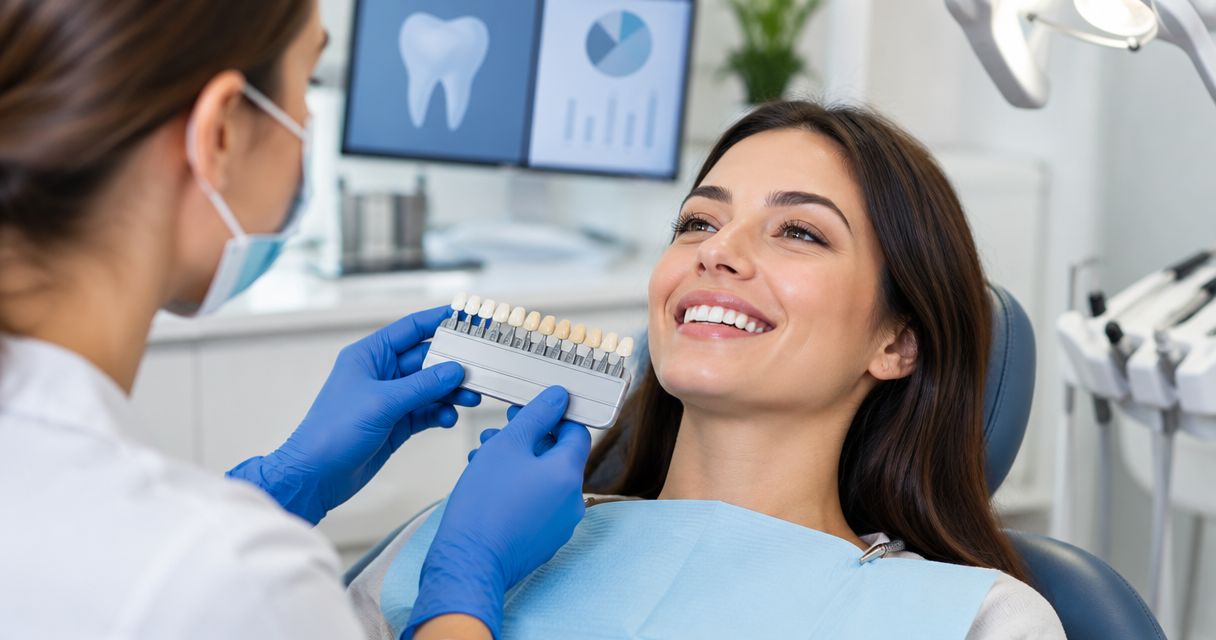
The cost of teeth whitening at the dentist in 2026 depends on the treatment method and what your individual plan includes; get a written, itemized estimate before choosing treatment. Ask whether the estimate includes an examination, whitening materials, follow-up care, and any dental treatment needed before bleaching, because those are separate parts of the decision.
- How much does teeth whitening cost at the dentist? Compare written estimates for the same treatment and included care.
- Professional teeth whitening changes natural tooth color; it does not lighten crowns, veneers, or tooth-colored fillings.
- Choose dentist-supervised whitening based on stain type, tooth sensitivity, and your ability to follow treatment instructions.
- Dental Arts of Atlantis offers general and cosmetic dentistry for Lake Worth families considering their smile-care options.
Why this matters
A whitening estimate only helps when you know what it covers. An appointment-based treatment and a dentist-supervised home treatment involve different materials, responsibilities, and follow-up arrangements. Comparing their totals without comparing their scope leaves out the information you need.
Start with this guide to getting a dental cost estimate before treatment. Your goal is a clear treatment plan, not simply a number attached to the word whitening.
Comfort matters, too. Whitening can cause temporary tooth sensitivity and gum irritation, and existing dental problems deserve attention before a cosmetic procedure. A plan that accounts for your mouth is more useful than a promise about how white your teeth will become.
How much does teeth whitening cost at the dentist in 2026?
The useful comparison is the complete treatment estimate, not an isolated whitening fee. Ask the dental office to identify the method, what is included, and which services would be handled separately. Keep the written estimate so you can compare the same items across offices.
The table below compares treatment approaches rather than assigning a single figure to different kinds of care. These are general categories, not a statement that every dental practice offers each option.
| Approach | Best for | Main advantage | Main limitation | What to clarify in the estimate |
|---|---|---|---|---|
| In-office whitening | People who prefer treatment administered during a dental appointment | The dental team applies treatment and protects surrounding tissues | Sensitivity can still occur; results depend on the discoloration | Planned appointments, follow-up, and whether home maintenance is included |
| Dentist-supervised take-home whitening | People comfortable following instructions at home | Treatment takes place at home under a dentist's directions | Results depend on correct use and following the prescribed schedule | Trays, whitening material, instructions, and review arrangements |
| Over-the-counter whitening | People considering self-directed treatment after checking suitability | You apply the product yourself | It does not include an individualized dental examination or treatment plan | Product instructions and whether a separate dental assessment is needed |
An examination answers a different question from a whitening session: are your teeth and gums ready for treatment? A cleaning also serves a different purpose. It removes deposits and some surface staining, while bleaching changes the color of natural teeth.
For a 2026 estimate, ask the office to separate necessary oral-health care from optional cosmetic care. You should understand why each item is recommended before agreeing to it.
In-office whitening: what should the estimate include?
In-office whitening suits people who want the application handled by a dental team rather than performed at home. The dentist evaluates whether bleaching fits the discoloration and explains the expected limits. Professional supervision does not eliminate every risk of sensitivity or guarantee a particular shade.
Ask what the planned appointment involves. Your estimate should identify whether it describes the initial treatment alone or also includes a review, additional treatment, or home-use materials. Do not assume that anything discussed during a consultation is included unless it appears in the plan.
Useful questions include:
- Who will assess whether whitening is suitable for my teeth?
- What does the treatment appointment include?
- How will you protect my gums during application?
- What should I do if sensitivity develops afterward?
- Is follow-up included, and what would require a separate appointment?
Choose in-office whitening for the supervised treatment setting, not for a guaranteed result. Ask the dentist to explain what your particular stain pattern means before you commit.
Dentist-supervised take-home whitening: what should the estimate include?
Dentist-supervised take-home whitening suits people who can follow a prescribed routine outside the office. Depending on the treatment system, the plan involves trays or another delivery method, whitening material, and directions specific to that system. Confirm the actual method rather than assuming every take-home treatment uses the same equipment.
The benefit is treatment at home with professional guidance. The limitation is that you are responsible for applying it correctly. Using more material or extending treatment beyond instructions is not a shortcut to a safer or better result.
Ask the office to explain:
- Which materials are included in the initial plan.
- How to apply the product and keep it away from your gums.
- How to clean and store reusable components, if supplied.
- When to pause treatment and contact the office.
- Whether replacement materials and future reviews are separate.
Choose dentist-supervised home whitening only if the routine fits your daily life. If you already struggle with sensitivity or following treatment schedules, raise that concern before choosing a method.
Why teeth whitening estimates vary
Whitening estimates describe different treatment scopes. These factors explain what to compare without assuming that a particular office includes or excludes anything:
- Treatment method: An office-administered procedure and a supervised home routine involve different delivery methods and clinical arrangements.
- Starting condition: Decay, irritated gums, exposed roots, or other dental concerns need assessment before cosmetic treatment.
- Stain type: Surface discoloration and discoloration within a tooth do not respond identically to the same approach.
- Materials included: Clarify whether the plan includes trays, whitening material, replacement supplies, or maintenance products.
- Follow-up scope: An initial treatment, a review appointment, and future touch-ups are distinct parts of care.
- Existing restorations: Crowns, veneers, and tooth-colored fillings do not bleach like natural teeth, which affects planning for a consistent appearance.
For your 2026 comparison, write these details beside each estimate. A plan with more included care is not the same service as a plan limited to the whitening application.
Avoid judging a treatment by equipment names alone. Ask what the proposed method changes about your treatment, comfort, and expected result. The explanation should relate to your teeth, not just the device.
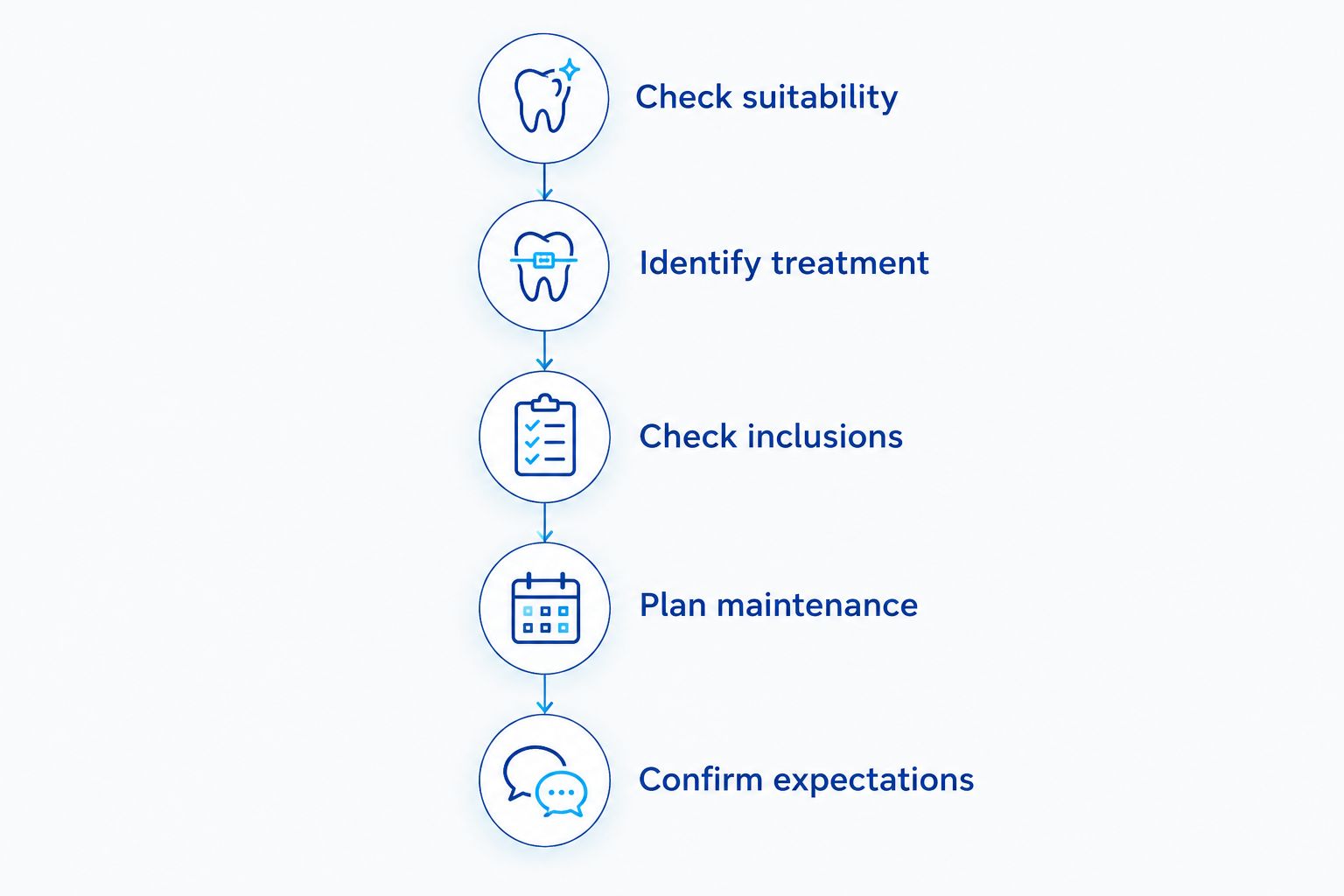
How do I compare whitening estimates without missing anything?
Use the same questions for each dental office. That makes the comparison useful even when offices recommend different approaches.
- Check suitability. Describe sensitivity, dental work, gum concerns, and any tooth that has changed color differently from its neighbors.
- Identify treatment. Ask whether the plan is for an office procedure or a supervised home routine, and why that method fits your situation.
- Check inclusions. Request a written list of examination services, materials, treatment appointments, and follow-up arrangements.
- Plan maintenance. Ask how future touch-ups are decided and whether additional materials or visits are separate.
- Confirm expectations. Discuss what will and will not change, especially if visible teeth include crowns or fillings.
These steps keep oral health, cosmetic goals, and the scope of treatment in the same conversation. You do not need dental terminology to ask for a clear explanation.
Bring the written plan home if you need time to decide. An understandable explanation should tell you which items address dental health, which address appearance, and which depend on your preference.
Should I whiten my teeth if I already have sensitivity?
Existing sensitivity needs assessment before whitening. Tell the dentist whether discomfort happens with cold drinks, brushing, sweets, or biting. The cause matters because whitening is not a treatment for decay, cracks, gum recession, or other problems that produce discomfort.
Dentist-supervised whitening allows you to discuss product use and what to do if symptoms develop. It does not make every sensitive tooth a suitable candidate. Ask for clear instructions about when to stop and whom to contact.
In 2026, use your symptoms—not an event date—as the starting point for planning. Persistent pain, pain when biting, or discomfort concentrated in a single tooth deserves a dental assessment rather than another whitening application.
Will whitening change crowns, veneers, or fillings?
Whitening does not lighten crowns, veneers, or tooth-colored fillings. If those restorations are visible when you smile, natural teeth can change color while the restorations remain the same shade. Discuss that possibility before treatment.
This does not mean you automatically need replacement dental work. The dentist should assess the existing restorations and explain whether their appearance creates a concern for your goals. Replacement is a separate decision, not an automatic part of whitening.
Tell the dentist if you are planning new cosmetic dental work. The order of treatment affects shade matching, so whitening and restorative planning belong in the same conversation.
Is professional whitening worth choosing over store-bought products?
Professional whitening is most useful when you need an individualized assessment and treatment guidance. Store-bought products provide instructions, but they do not examine your teeth, identify the cause of discoloration, or evaluate existing restorations.
That distinction matters if your teeth are sensitive, your gums are irritated, or the discoloration is uneven. A single dark tooth is different from widespread staining and should be examined before you attempt to bleach it.
Professional care also has limits. Bleaching does not repair chips, reshape teeth, close gaps, or change restoration color. Choose it for a color concern after discussing whether bleaching addresses that concern.
Where can Lake Worth families discuss cosmetic dental care?
Dental Arts of Atlantis is a local option for Lake Worth families seeking general and cosmetic dentistry. The practice serves families in the Palm Beach County area and offers general, cosmetic, pediatric, and implant dental care.
When you contact Dental Arts of Atlantis, explain that you want to discuss tooth discoloration and understand the available cosmetic treatment options. Ask which approach is appropriate for you and request a current written estimate before making a treatment decision.
Dental Arts of Atlantis's cosmetic dentistry services are relevant to a conversation about smile appearance. The important boundary remains the same: a cosmetic treatment needs to match the cause of your concern, and whitening cannot solve every appearance issue.
Discuss your smile goals
Ask about cosmetic treatment options and request a current written estimate.
FAQ
How much does teeth whitening cost at the dentist in 2026?
Your individual treatment estimate depends on the whitening method and included care. Request a current written breakdown covering treatment, materials, any preliminary dental care, and follow-up before choosing a plan.
Does a teeth whitening estimate include a dental cleaning?
Do not assume a cleaning is included in a whitening estimate. Ask the office to identify whether examination and cleaning services are included or handled separately, and whether either is recommended before whitening.
Is dentist-supervised home whitening better than in-office whitening?
Neither method is best for every person. In-office whitening fits people who prefer office-administered application, while supervised home whitening fits people who can follow the prescribed routine at home.
Can I whiten my teeth if I have crowns or veneers?
Crowns and veneers do not lighten with tooth bleaching. Your dentist should assess whether whitening nearby natural teeth would create a visible shade difference before recommending treatment.
Will professional teeth whitening make my teeth sensitive?
Professional whitening can cause temporary sensitivity and gum irritation. Tell your dentist about existing discomfort and follow the treatment instructions, including when to pause and contact the office.
How long will my teeth stay white after treatment?
Whitening results are not permanent, and the maintenance plan depends on your teeth and staining habits. Ask your dentist how to manage recurring discoloration rather than assuming everyone needs the same touch-up schedule.
Can Dental Arts of Atlantis help me discuss cosmetic dental treatment?
Dental Arts of Atlantis offers general and cosmetic dentistry in Lake Worth for families in the Palm Beach County area. Contact the practice to discuss your concerns, appropriate options, and a current treatment estimate.
One last thing
Whiter does not always mean more even. If a crown or filling already matches your natural teeth, bleaching the surrounding teeth can make that restoration stand out. Mention visible dental work before you choose a target shade.
For your 2026 appointment, bring a short list of what bothers you: overall darkness, uneven color, a dark tooth, or surface stains. That description helps the dentist distinguish a whitening question from a problem that needs a different treatment.
Related guides
- How to whiten teeth safely without damaging enamel
- Teeth whitening options for people with sensitive teeth
- Teeth whitening methods for coffee and wine stains